Altered book art
CostLow
Includes: old books, basic craft supplies, paints, glue Example: thrifted books ~€1–5; craft knife ~€10; Mod Podge ~€8; paints and collage bits as desired
What it is
Taking scissors and glue to a real book feels almost transgressive, which is exactly why altered book art has the charge it does. You are repurposing an object built to be read into a canvas, and the original text becomes raw material rather than something to be preserved.
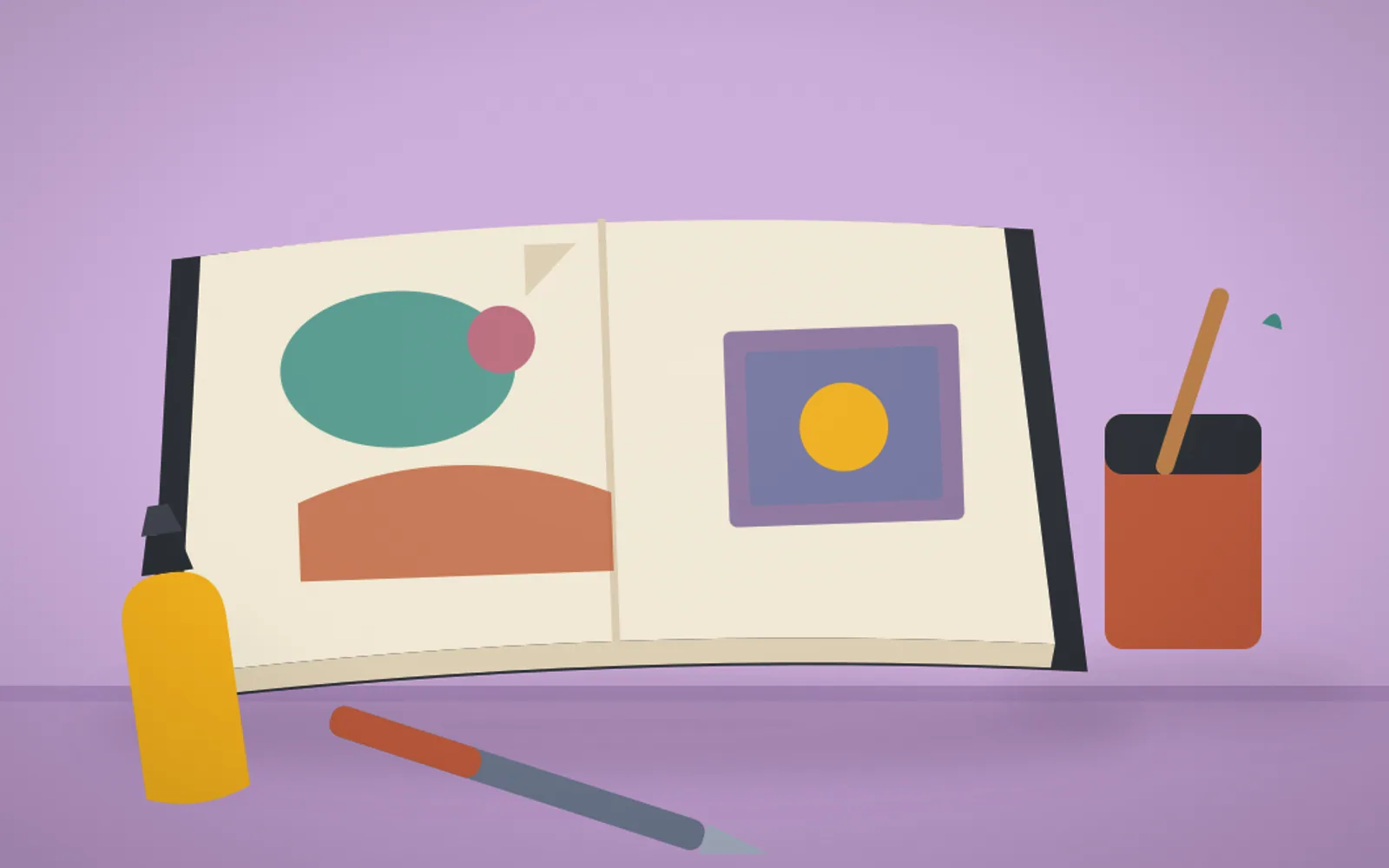
Altered book art is the practice of transforming an existing book, usually an old, unwanted, or damaged one, into a new work of art by cutting, painting, folding, collaging, and otherwise reworking its pages. The book stops being something to read and becomes the structure and surface for creation. Pages get painted over, cut into, glued together, turned into pockets or windows, layered with collage, until the original volume is reborn as a three-dimensional art object, a visual journal, or a sculptural piece.
The appeal lies partly in the constraint and partly in the materials. Starting with an existing book gives you a ready-made structure, pages, a spine, a cover, and an existing layer of printed text and images to work with, react against, or partially reveal. Many artists leave fragments of the original words showing, creating a dialogue between the old text and the new art. The raw material costs almost nothing, charity shops and library sales sell unwanted hardbacks for a euro or less, which removes any fear of "wasting" expensive supplies.
The practice runs in several distinct directions. Some people create elaborate altered journals, working into the book over months as a kind of diary. Others do "book sculpture", cutting and folding pages into three-dimensional forms. Blackout or found poetry, where you obscure most of a page to leave only chosen words visible, is a quieter literary cousin of the same impulse.
The one practical hurdle is that books are not designed to take wet media. Thin paper buckles and tears under paint and glue, so altered book artists often gesso the pages first to create a sturdier surface, or glue several pages together to make a stronger base that can hold heavier work.
How it works
Pick a hardback with sewn signatures, not a glued paperback, because the binding determines whether the finished piece survives handling. Sewn books, where you can see the thread in the spine when it is open, hold together as you cut, fold, and glue pages. Glued paperbacks shed pages the moment you work them. A thick old hardback from a charity shop for a pound is the ideal raw material, the more pages the better.
Seal the page block first if you want a rigid base to carve into. Clamp the book shut, leaving the pages you will work on free, and brush PVA glue down the outer edges so the block dries into a solid brick you can cut like wood. For folded-book art, you skip the sealing and fold individual pages to a measured pattern instead, which needs no cutting at all and is the gentler entry point.
The techniques branch widely from there. You cut windows down through many pages to reveal images below, carve niches to hold objects, fold pages into sculptural patterns, or paint and collage over the text to make altered-book journal spreads. A sharp craft knife with fresh blades is essential, since a dull blade tears paper rather than slicing it. Change blades far more often than feels necessary.
Benefits
What you need
Here's what to gather before you start. The essentials are marked.
Some links below are affiliate links. As an Amazon Associate, trylii.com earns from qualifying purchases, at no extra cost to you.
FAQs
Taking an existing book and transforming it into a piece of art by painting, cutting, folding, collaging, or drawing on its pages. The book stops being something you read and becomes a canvas and a material, where the printed text often shows through as part of the artwork. I think of it as giving a discarded book a second life. Some people make one elaborate page; others rework the entire volume into a single object.
A sturdy hardback with decent paper, found cheaply. I look in charity shops and library sales for old hardbacks with sewn (not glued) bindings, because they hold up to wet media and heavy alteration far better than cheap paperbacks. Thicker, slightly textured pages take paint and glue without falling apart, while thin glossy paper buckles. Choosing a book whose subject or images you find interesting adds another layer to work with.
Prepare the page and use less water. Book paper is thin and absorbent, so wet paint warps it, which I reduce by first sealing pages with a coat of gesso or matte medium, which stiffens them and gives a surface paint grips. Gluing two or three pages together creates a thicker, more stable working surface. Working with thicker paint rather than thin washes also keeps the buckling down.
It is the question everyone asks, and the honest answer is that I only use books already headed for the bin or the recycling, never anything rare or loved. Charity shops discard unsellable books constantly, and giving one a new life as art feels closer to rescue than destruction. If it bothers you, that hesitation is worth listening to. Plenty of people use damaged or water-stained books precisely because they were otherwise unsalvageable.
You might also like
 VISUAL
Pet portraits with a camera
VISUAL
Pet portraits with a camera
 VISUAL
Mixed media art journaling
VISUAL
Mixed media art journaling
 VISUAL
Flat lay photography styling
VISUAL
Flat lay photography styling
 VISUAL
Chalkboard lettering
VISUAL
Chalkboard lettering
 VISUAL
AI art prompt crafting
VISUAL
AI art prompt crafting
 VISUAL
Logo design basics
VISUAL
Logo design basics
 VISUAL
Gouache painting
VISUAL
Gouache painting
 VISUAL
Zentangle / mandala drawing
VISUAL
Zentangle / mandala drawing
 VISUAL
Typography design
VISUAL
Typography design
 VISUAL
Digital painting (with tablet)
VISUAL
Digital painting (with tablet)
 BODY
Mindful eating practice
BODY
Mindful eating practice
 WILD
Gold panning in rivers
See all in Visual & Digital Arts
WILD
Gold panning in rivers
See all in Visual & Digital Arts