Cold brew coffee craft
CostLow to Medium
Includes: A cold brew maker or mason jar and strainer, plus coffee beans Example: A cold brew maker 15-30
What it is
A jar of coffee grounds and cold water sits on the counter overnight, doing nothing visible, and by morning it has quietly become something smoother and less bitter than any pot of hot coffee you could brew in minutes.
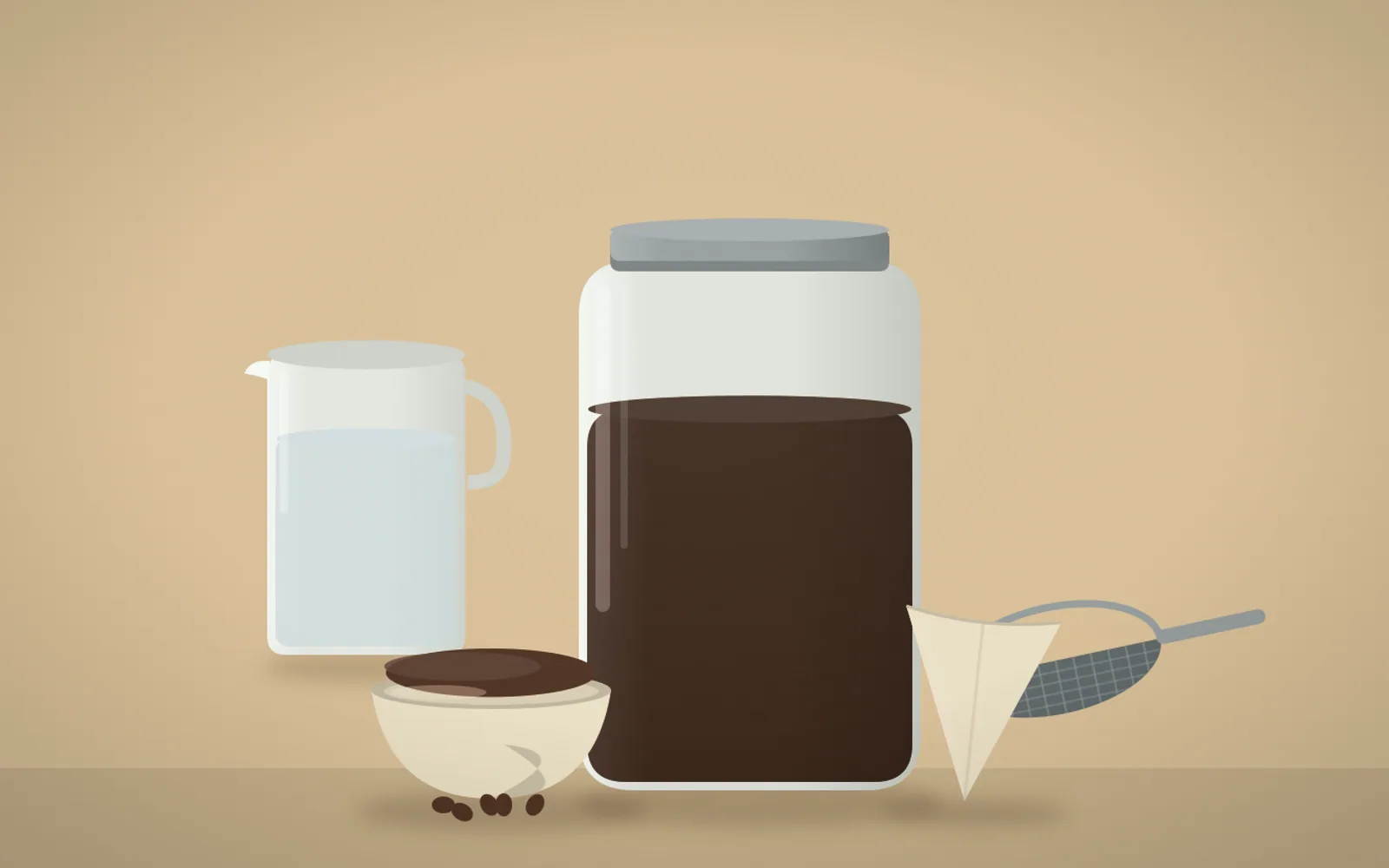
Cold brew coffee craft is the practice of steeping coarsely ground coffee in cold or room-temperature water for 12 to 24 hours, then straining out the grounds to leave a concentrate. Because heat is never involved, the chemistry is completely different from hot brewing. The slow, cold extraction pulls out flavour and caffeine while leaving behind most of the bitter, acidic compounds that heat releases.
The result is a concentrate, not a finished drink. You dilute it with water, milk, or ice, usually one part concentrate to one or two parts liquid, which means a single batch stretches a long way. The grind matters more than almost anything; too fine and the brew turns muddy and over-extracted, too coarse and it tastes weak. A burr grinder setting close to French press is the sweet spot.
Most people start with a simple jar and a fine sieve lined with cloth before buying anything dedicated. The first batch is usually a revelation in how smooth coffee can taste without the sharp edge. The honest trade-off is patience, since you have to plan a day ahead, but the concentrate keeps in the fridge for up to two weeks, so one brew covers a working week.
How it works
Coarse ground coffee is the starting point that prevents the most common problem, a cloudy and bitter brew. Cold water cannot extract from fine grounds without over-extracting and leaving sediment, so grind at a setting close to what you would use for a cafetière, like coarse sea salt.
The ratio does the heavy lifting. A strong concentrate uses around 1 part coffee to 4 parts cold water by weight, which you dilute later. For a ready-to-drink batch, go closer to 1:8. Stir the grounds into cold or room-temperature water in a jar or jug, making sure every bit is wet, then cover and leave it.
Time replaces heat here. Cold brew extracts slowly over 12 to 18 hours, on the counter or in the fridge. Longer than 24 hours and it turns woody and over-extracted, so set a reminder rather than leaving it overnight and forgetting.
Strain through a fine mesh, then again through a paper filter or muslin to catch the fine silt. The result keeps in the fridge for up to two weeks, far longer than hot coffee, and tastes smoother and less acidic because the heat compounds that cause bitterness never get extracted.
Benefits
What you need
Here's what to gather before you start. The essentials are marked.
Some links below are affiliate links. As an Amazon Associate, trylii.com earns from qualifying purchases, at no extra cost to you.
FAQs
A ratio of about 1:8 coffee to water by weight for a concentrate you dilute, or 1:15 to drink straight. That works out to roughly 100g of coarse coffee to 800ml of water for concentrate. Steep 12-18 hours at room temperature or in the fridge, then strain. Dilute the concentrate roughly half and half with water or milk to serve.
Yes, coarse is essential. A fine grind over a long steep turns bitter and muddy, and it clogs your filter so straining becomes a nightmare. Aim for something like coarse sea salt, similar to a French press grind. If you buy pre-ground, ask for cold brew or French press coarseness rather than standard.
Concentrate lasts up to two weeks in the fridge in a sealed bottle, which is one of its best features. Once diluted it's best within a few days, since dilution shortens its life. Keep it sealed and cold, and you have ready coffee on tap all week. Make a big batch on Sunday and you're sorted.
You might also like
 KITCHEN
Gift-box assembly for edibles
KITCHEN
Gift-box assembly for edibles
 KITCHEN
Sous vide cooking
KITCHEN
Sous vide cooking
 KITCHEN
Crafting edible flower ice cubes
KITCHEN
Crafting edible flower ice cubes
 KITCHEN
Toasting and grinding whole spices
KITCHEN
Toasting and grinding whole spices
 KITCHEN
DIY caramel sauces for gifting
KITCHEN
DIY caramel sauces for gifting
 KITCHEN
Tempering chocolate
KITCHEN
Tempering chocolate
 KITCHEN
Baking geometric-patterned cakes
KITCHEN
Baking geometric-patterned cakes
 KITCHEN
Cooking with nettles
KITCHEN
Cooking with nettles
 KITCHEN
Fermenting hot sauce
KITCHEN
Fermenting hot sauce
 KITCHEN
Seasonal vegetable-focused meals
KITCHEN
Seasonal vegetable-focused meals
 SKILL
Rewiring lamps or small devices
SKILL
Rewiring lamps or small devices
 HOME
Sewing reusable produce bags
See all in In the Kitchen
HOME
Sewing reusable produce bags
See all in In the Kitchen