Day hiking on local trails
CostLow to Medium
Includes: Trail access (free) plus hiking shoes and basic day kit Example: Hiking shoes €60–150, day pack and jacket €50–100
What it is
Half an hour from almost any front door in Europe, there is a path worth walking that you have never set foot on. Day hiking is just that: walking trails and natural paths for a single day, no overnight kit, no permits in most places, returning to your own bed by evening. Forests, ridgelines, coastal paths, farm tracks. You go out, you walk, you come back.
The appeal is the pace. Walking moves slowly enough that you actually notice things. Light shifting under a beech canopy, the smell of wet bracken, a view that unspools gradually as you climb rather than arriving all at once through a windscreen. Running blurs it. Driving skips it. On foot you absorb a landscape instead of just crossing it.
What makes the practice so easy to start is the infrastructure already sitting there, free. The UK alone keeps roughly 225,000 km of public rights of way open by law. Europe's GR network of long-distance footpaths stretches across the continent, and most of it costs nothing to use. You need shoes that fit, a litre or two of water, and a rough idea of where you are going.
Honestly, the hardest part is leaving the house. Once you are twenty minutes in, the activity sells itself. Most people who start with one short loop find themselves planning the next walk before the first is over.
How it works
A good trail app does most of the planning for you, and the three worth having are AllTrails, Komoot, and OS Maps. Each shows distance, total elevation gain, surface type, and reviews from people who walked it last week. Match the route to where you actually are, not where you wish you were. For a first outing, something well-marked of 8 to 12km with under 400m of climbing is a sensible ceiling.
Pack water before anything else. A litre per two hours of walking is the working rule, and almost everyone underpacks it on their first few hikes. Add a snack, a small first aid kit, a waterproof layer, and a phone with the route downloaded for offline use, because signal vanishes in valleys and woodland exactly when you want it most.
Dress in layers rather than one warm thing, since hill weather shifts in minutes and you want to add and shed easily. Sturdy shoes earn their place the moment the path turns rocky or wet. Tell someone your route and rough return time. Then the single habit that changes everything: leave early. Morning light is better, the trail is emptier, and you keep a margin if the walk runs long.
What catches most beginners out is reading distance instead of ascent. Fifteen flat kilometres is a gentle afternoon. The same fifteen with 800m of climbing is a hard day, and the elevation profile in the app tells you which one you are signing up for.
Benefits
What you need
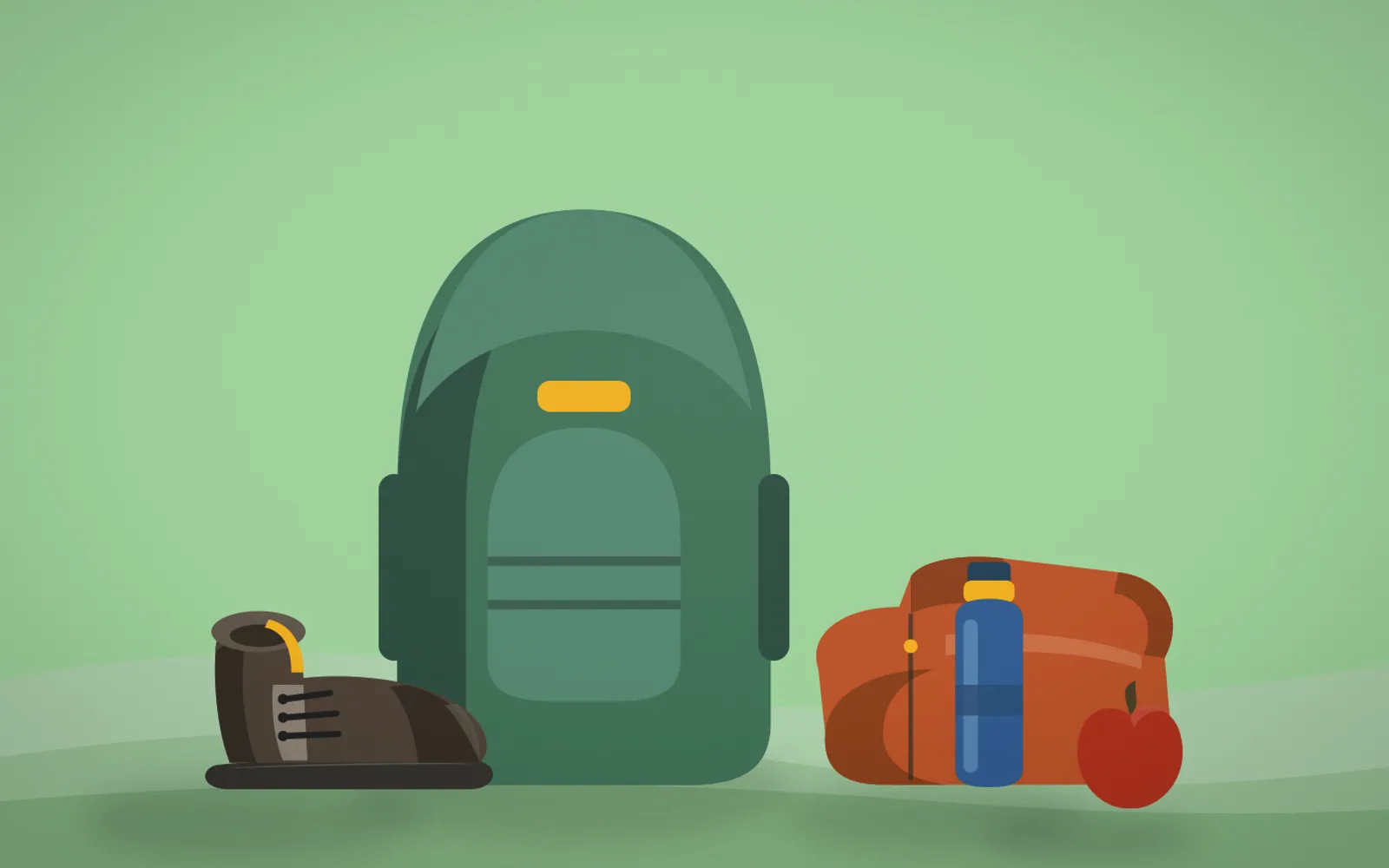
Here's what to gather before you start. The essentials are marked.
Some links below are affiliate links. As an Amazon Associate, trylii.com earns from qualifying purchases, at no extra cost to you.
FAQs
AllTrails has the largest database of user-reviewed routes, with a free version and a paid tier (around €36/year) for offline maps. Komoot plans routes brilliantly across Europe and lets you filter by surface type. In the UK, OS Maps is the official mapping standard, and IGN does the same job in France. Whatever you pick, download the map for offline use before you leave. Signal drops the moment you get anywhere interesting.
Look at the elevation gain, not the distance. 15km on the flat is an easy afternoon. 15km with 800m of climbing is a serious day out. Both AllTrails and Komoot show an elevation profile, so check the shape of the climb before committing. For your first few walks, stick to anything rated easy or moderate with under 400m of ascent. Fitness builds faster than you expect once you go regularly.
Water (roughly 1 litre per two hours), more food than you think you need, a waterproof jacket, a small first aid kit, and a phone with offline maps. Add a foil emergency blanket too. It weighs almost nothing and matters enormously if someone twists an ankle and you are sitting still waiting for help. For anything over four hours, throw in a headtorch and an extra warm layer.
No. A decent pair of trail shoes or trainers with grip handles most local paths fine, and plenty of experienced walkers prefer them for being lighter. Boots earn their place on rough, wet, or steep ground where ankle support and a stiff sole help. Buy boots once you know you will keep going, and buy them half a size up to leave room for thick socks and swollen feet at the end of a long day.
You might also like
 WILD
Wild camping in summer
WILD
Wild camping in summer
 WILD
Wild mushroom hunting
WILD
Wild mushroom hunting
 WILD
Animal tracking
WILD
Animal tracking
 WILD
Tidepool exploration
WILD
Tidepool exploration
 WILD
Making rope and cordage
WILD
Making rope and cordage
 WILD
Annual river clean-up paddling
WILD
Annual river clean-up paddling
 WILD
Scouting abandoned places (safe & legal)
WILD
Scouting abandoned places (safe & legal)
 WILD
Water sourcing and purification
WILD
Water sourcing and purification
 WILD
Map & compass navigation
WILD
Map & compass navigation
 WILD
Coastal path walking
WILD
Coastal path walking
 CRAFT
Polymer clay earrings
CRAFT
Polymer clay earrings
 BODY
Daily intention-setting practice
See all in Wild & Active
BODY
Daily intention-setting practice
See all in Wild & Active