Hand-pulled candy making
CostLow to Medium
Includes: Sugar, glucose and flavourings plus a sugar thermometer Example: A reliable sugar thermometer 15-30
What it is
Poured sugar sets hard, glassy, and clear, the stuff of boiled sweets. Pulled sugar sets opaque, glossy, and satiny, soft enough to bite. The difference is not the recipe but the air worked into it by hand, and that transformation is what makes pulled candy a genuine spectacle to watch.
Hand-pulled candy making is the practice of stretching and folding hot cooked sugar repeatedly until it lightens in colour and develops a smooth, aerated texture. The repeated pulling incorporates thousands of tiny air bubbles and aligns the sugar crystals, turning a clear molten syrup into something pearly and pliable. From this base come candy canes, taffy, and the intricate striped sweets of traditional confectioners.
The chemistry is all about precise temperature. Sugar syrup must be boiled to the hard-crack stage, around 150°C, then cooled to a point where it is hot enough to stretch but cool enough to handle. Pull it too soon and it burns you; too late and it sets before you can work it. The pulling itself is a workout, and traditional sweet shops once used wall-mounted hooks to do the heavy stretching.
Most people start with a simple two-colour candy cane and quickly learn that timing is everything. The honest reality is that it demands speed and a tolerance for working with very hot sugar, so it is not a relaxed afternoon activity. But the result, glossy striped sweets made entirely by hand, is genuinely impressive, and the ingredients cost almost nothing.
How it works
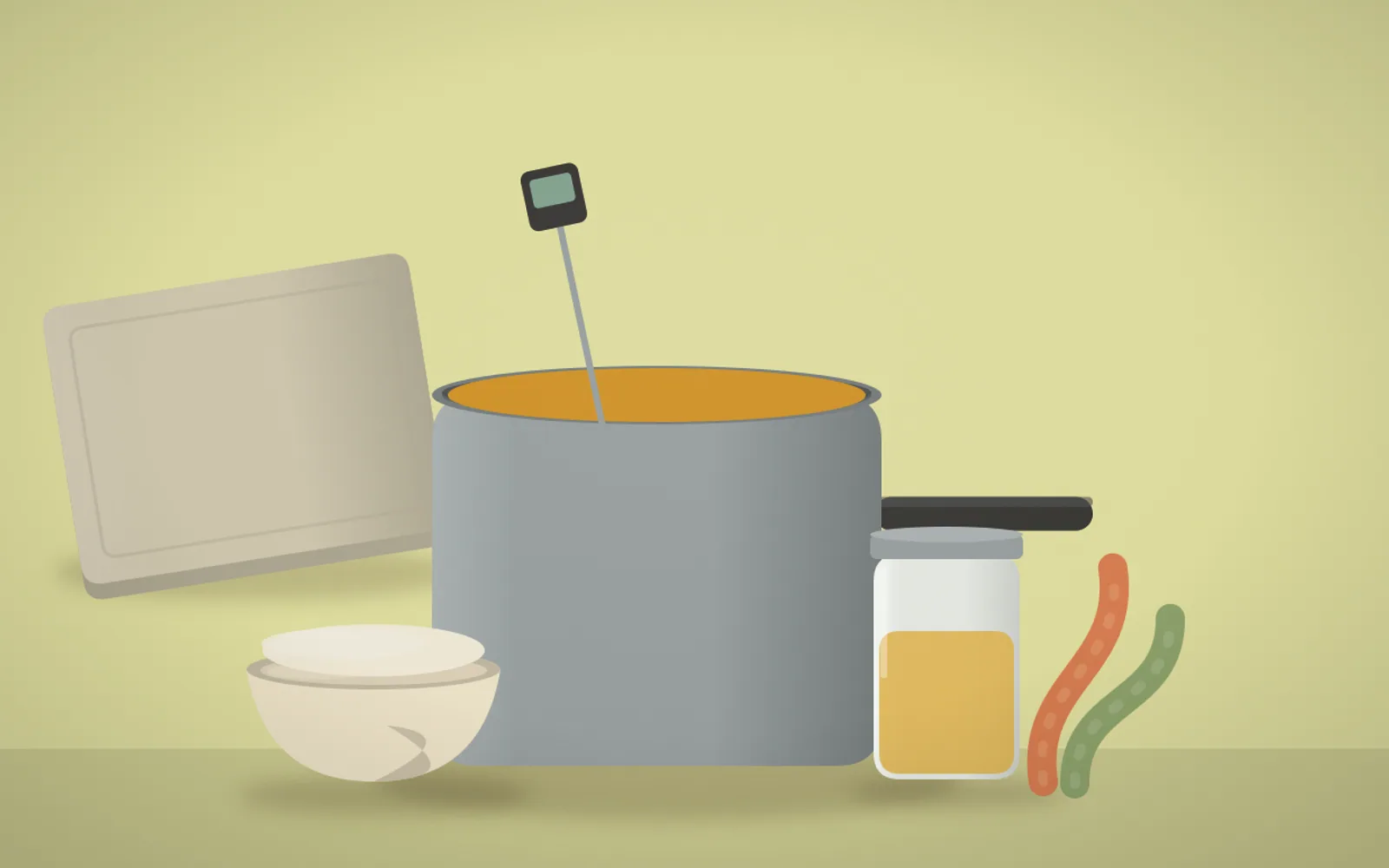
The thermometer is the tool that frames this entire process, because hand-pulled candy is sugar cooked to a precise temperature and nothing forgives guesswork. A digital probe thermometer that reads quickly and clips to the pan is worth more than any other piece of kit here. A few degrees past the target turns chewy candy hard and brittle.
Cook sugar, water, and a little corn syrup or cream of tartar, which prevents crystallisation, to the hard-ball or soft-crack stage depending on the candy. For a classic pulled taffy or seaside rock, you are aiming around 127 to 132°C. Pour the hot syrup onto a lightly oiled marble slab or silicone mat to cool until it is just bearable to touch.
Now the pulling begins, and this is where the magic happens. Fold and stretch the mass repeatedly, doubling it back on itself. This works air into the candy, and over a few minutes it transforms from clear and amber to opaque, satiny, and pale. That aeration is what gives pulled candy its characteristic light, slightly chewy bite.
Once it holds a satin sheen, pull it into ropes, twist in colours if you want stripes, and cut quickly with oiled scissors before it sets hard.
Benefits
What you need
Here's what to gather before you start. The essentials are marked.
Some links below are affiliate links. As an Amazon Associate, trylii.com earns from qualifying purchases, at no extra cost to you.
FAQs
A heavy-bottomed pan, a reliable sugar thermometer, and heat-resistant gloves or silicone mats. The thermometer is non-negotiable, because hand-pulled candy depends on hitting an exact temperature, and guessing ruins the batch. A marble or silicone surface to cool the sugar on helps a lot. Pulling itself is done by hand, so the gloves protect you from sugar that's still very hot.
Hard-crack stage, around 150-155°C, for most pulled candy like candy canes and ribbon candy. Below that and it stays sticky and won't hold shape, above and it scorches and turns bitter. This is why the thermometer matters so much, since the window is narrow and the sugar goes from perfect to burnt in seconds. Take it off the heat the moment it hits temperature.
Air. Folding and stretching the cooled sugar repeatedly works tiny air bubbles into it, which catch light and turn it from clear and glassy to satiny and pale. That's the whole point of pulling, and it also changes the texture from hard to slightly softer. Pull until it lightens and develops a sheen, then shape quickly before it sets.
Work in stages and keep it warm. Pour the cooked sugar out, let it cool just until you can handle it with gloves, then pull, shape, and cut quickly while it's still pliable. If it sets too hard to work, a few seconds under a heat lamp or in a low oven softens it again. Having your colours, flavours, and tools ready before you start is what makes it manageable.
Molten sugar is the real hazard, more than people expect. At over 150°C, it's far hotter than boiling water and sticks to skin instead of running off, so a splash causes serious burns. Keep children and pets out of the kitchen, wear gloves, have a bowl of cold water nearby, and never leave the pan unattended on the heat. Treat it with the same respect as hot oil.
⚠️ Cooked sugar reaches over 150°C and causes severe burns on contact. Wear protection, keep children away, and keep cold water nearby.
You might also like
 KITCHEN
Making herbal bitters
KITCHEN
Making herbal bitters
 KITCHEN
Homemade vanilla extract gifts
KITCHEN
Homemade vanilla extract gifts
 KITCHEN
Autumn root vegetable nourishing
KITCHEN
Autumn root vegetable nourishing
 KITCHEN
Designing themed cupcakes
KITCHEN
Designing themed cupcakes
 KITCHEN
Herb-infused olive oils
KITCHEN
Herb-infused olive oils
 KITCHEN
Charcuterie board arranging
KITCHEN
Charcuterie board arranging
 KITCHEN
Seasonal vegetable-focused meals
KITCHEN
Seasonal vegetable-focused meals
 KITCHEN
Air fryer cooking
KITCHEN
Air fryer cooking
 KITCHEN
Matcha whisking at home
KITCHEN
Matcha whisking at home
 KITCHEN
Choux pastry and éclairs
KITCHEN
Choux pastry and éclairs
 MIND
Acrostic poem writing
MIND
Acrostic poem writing
 CRAFT
Wood carving (small projects)
See all in In the Kitchen
CRAFT
Wood carving (small projects)
See all in In the Kitchen