Spherification techniques
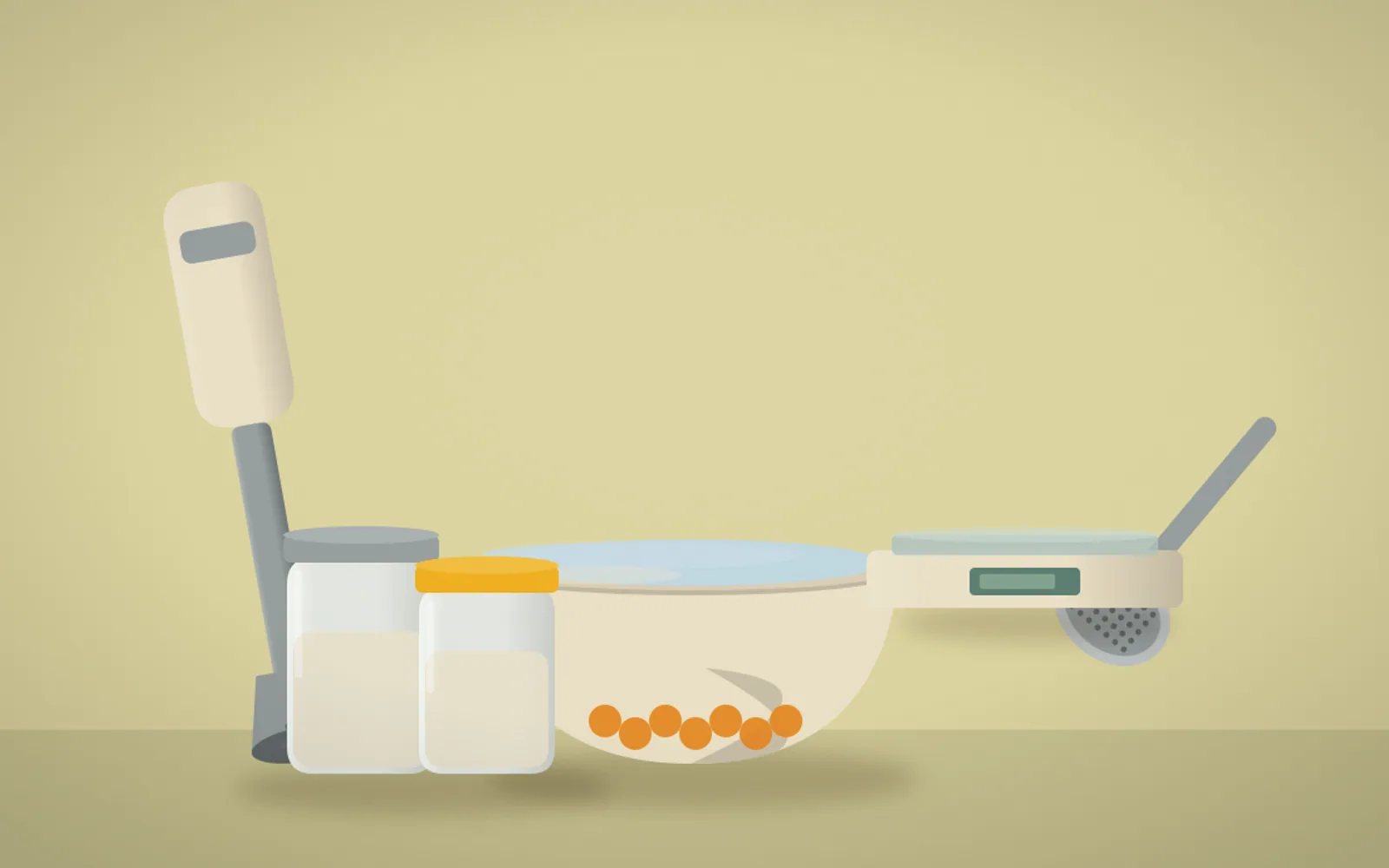
CostLow to Medium
Includes: A sodium alginate and calcium chloride kit Example: A kit 15-30 with enough for hundreds of experiments
What it is
A spoonful of orange liquid slides into a bath of cloudy water, and within minutes it has become a delicate sphere with a thin skin and a liquid centre that bursts on the tongue. The first time it works, it looks less like cooking and more like a magic trick.
Spherification techniques are a set of modernist cooking methods that turn flavoured liquids into soft, membrane-bound spheres that burst when bitten, releasing the liquid inside. Developed in avant-garde restaurants and popularised by Spanish chefs in the early 2000s, the technique uses food-grade gelling agents to form a thin gel skin around a liquid centre. The result, often called caviar or ravioli depending on size, is a signature of molecular gastronomy.
The science relies on a reaction between two ingredients. Sodium alginate, extracted from seaweed, is mixed into the flavoured liquid, and when that liquid meets a bath containing calcium ions, the alginate instantly gels at the boundary where the two meet, forming a skin while the inside stays liquid. The longer the sphere sits in the bath, the thicker and firmer the skin becomes, which is why timing controls the texture.
This basic version, called direct spherification, works well for liquids that are not too acidic or calcium-rich, since both can interfere with the gelling. Small droplets make caviar-like pearls, while a spoonful makes a larger burst-in-the-mouth sphere.
Most people start with a simple fruit juice caviar using a basic alginate-and-calcium kit, which costs around €20 and lasts many sessions. The honest reality is that spherification is fussy about ratios and ingredients, and acidic or dairy liquids fail in the direct method, requiring the reverse technique instead. But few cooking techniques produce such a dramatic, genuinely surprising result.
How it works
Sodium alginate and calcium are the two chemicals that make spherification work, and understanding their roles makes the whole technique click. The flavoured liquid you want to turn into spheres gets blended with sodium alginate, while a separate bath holds a calcium solution, usually calcium chloride. When the alginate liquid meets the calcium, a thin gel skin forms instantly at the boundary, trapping the liquid inside.
For basic spherification, the alginate goes into the flavoured liquid. Blend it in thoroughly and, crucially, let it rest for several hours or overnight in the fridge, because blending traps air bubbles that ruin the spheres, and they need time to escape. A handheld blender followed by resting is the practical route.
Drop the alginate liquid into the calcium bath using a spoon or syringe, and a skin forms around each droplet on contact. Leave them in the bath only briefly, perhaps 30 seconds to a couple of minutes, because the longer they sit, the further the gelling works inward, eventually turning the whole sphere solid rather than leaving a liquid burst.
Lift them out with a slotted spoon and rinse in plain water to stop the reaction. Serve quickly, since basic spheres keep gelling slowly even after rinsing.
Benefits
What you need
Here's what to gather before you start. The essentials are marked.
Some links below are affiliate links. As an Amazon Associate, trylii.com earns from qualifying purchases, at no extra cost to you.
FAQs
It's a technique that turns flavoured liquid into spheres with a thin gel skin that burst in the mouth. You need sodium alginate, a calcium salt (calcium chloride or calcium lactate), a scale that measures to 0.1g, and an immersion blender. The chemistry is precise, so accurate measuring matters more than cooking skill. A starter molecular gastronomy kit (around €20-30) bundles the ingredients to begin.
Where the calcium and alginate live. In basic spherification, the flavoured liquid contains alginate and you drop it into a calcium bath, which suits thin, low-calcium liquids but keeps gelling over time. In reverse, the liquid contains calcium and you drop it into an alginate bath, which works for dairy and acidic or high-calcium liquids and stops gelling once removed. Reverse is more forgiving for most real ingredients.
Usually the liquid is too acidic, too thick, or wrongly measured. Basic spherification fails with very acidic liquids because acidity stops alginate gelling, so you either adjust the pH with a little sodium citrate or switch to reverse spherification. Air bubbles from blending also ruin them, so let the alginate mix rest for a few hours to release trapped air before using it.
Yes, this is chemistry more than cooking, so weigh everything. The ratios of alginate and calcium are small and exact, typically fractions of a percent by weight, and eyeballing them simply won't work. A scale accurate to 0.1g is essential, not optional. Once you respect the measurements, the technique is reliable, but guessing quantities is the fastest route to frustration.
Yes, sodium alginate and the calcium salts are food-grade additives used in normal small amounts. Alginate comes from seaweed and the calcium salts are common food additives, all safe at the quantities used in spherification. Buy food-grade products specifically, not industrial-grade chemicals, and follow the recipe amounts. Calcium chloride tastes bitter in excess, which is one reason calcium lactate is often preferred for the liquid itself.
You might also like
 KITCHEN
Smoking salts
KITCHEN
Smoking salts
 KITCHEN
Homemade vanilla extract gifts
KITCHEN
Homemade vanilla extract gifts
 KITCHEN
Styling food for photos
KITCHEN
Styling food for photos
 KITCHEN
Choux pastry and éclairs
KITCHEN
Choux pastry and éclairs
 KITCHEN
Crafting flavoured extracts (e.g. vanilla)
KITCHEN
Crafting flavoured extracts (e.g. vanilla)
 KITCHEN
Herb-infused olive oils
KITCHEN
Herb-infused olive oils
 KITCHEN
Cooking with nettles
KITCHEN
Cooking with nettles
 KITCHEN
No-churn ice cream science
KITCHEN
No-churn ice cream science
 KITCHEN
Making herbal bitters
KITCHEN
Making herbal bitters
 KITCHEN
Sharpening kitchen knives
KITCHEN
Sharpening kitchen knives
 VISUAL
Encaustic wax art
VISUAL
Encaustic wax art
 VISUAL
Manga character design
See all in In the Kitchen
VISUAL
Manga character design
See all in In the Kitchen