Upcycling jars for pantry use

CostFree to Low
Includes: reused jars, optional labels or lid paint Example: free if using jars on hand; label supplies €5-15
What it is
Opening a cupboard and finding twelve mismatched half-open packets of pasta, all folded shut with different clips, is a small daily friction most people just accept. A shelf of matching jars fixes it for free.
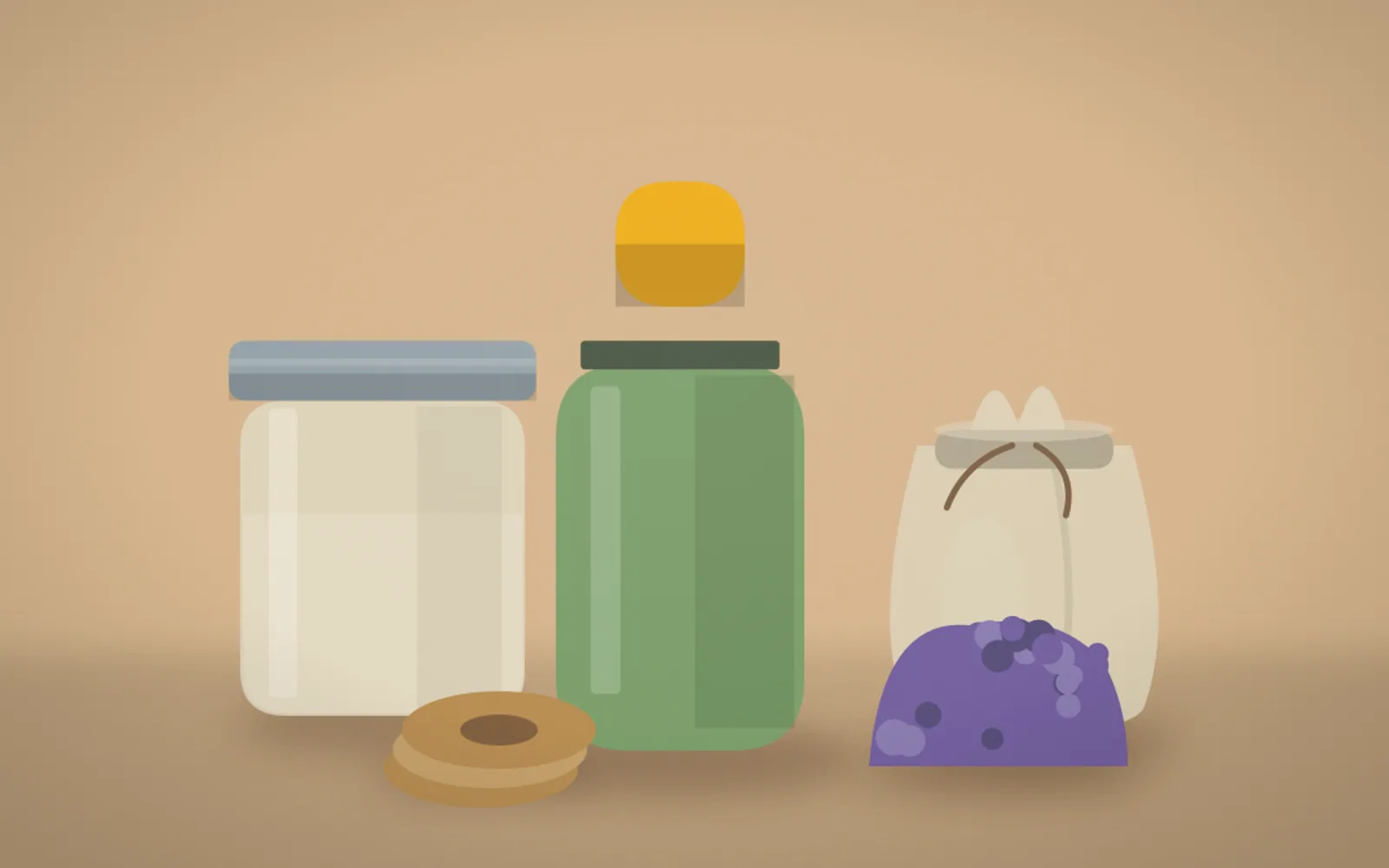
Upcycling jars for pantry use means cleaning out the glass jars that pasta sauce, jam, and pickles arrive in, and reusing them to store dry goods. You soak off the labels, give them a wash, and fill them with rice, flour, lentils, or spices. The result is an airtight, see-at-a-glance pantry that cost nothing beyond goods you already bought, and it keeps food fresher than the original bags, which let in air and pantry moths.
The fiddly bit is label glue, and it is worth knowing the trick. Soaking jars in warm soapy water lifts paper labels, but the sticky residue often stays. A paste of bicarbonate of soda and a little vegetable oil, rubbed on and left for a few minutes, dissolves the adhesive cleanly where scrubbing alone just smears it. Matching lids are the other quiet upgrade, and a pack of universal storage lids turns a jumble of jars into something that looks deliberate.
How it works
Boil the jars first if they held anything strongly scented or oily. A jar that smelled of pickles will make your flour smell of pickles, and the residue clings to glass, so a wash in hot soapy water followed by a few minutes in boiling water or a hot dishwasher cycle resets it properly. Bake-off the smell in a low oven for the truly stubborn ones.
Getting the label and its glue off cleanly is the job that defeats most people. Soak the jar in warm soapy water until the paper lifts, then attack the sticky residue left behind, which is the real enemy, with a little cooking oil or bicarbonate of soda paste rubbed on and left for ten minutes. The oil dissolves the adhesive so it wipes away instead of rolling into maddening grey balls.
The seal is what makes a jar genuinely useful for storage rather than just decorative. Jars with rubber gaskets or good screw lids keep flour, pasta, rice, and pulses fresh and pest-proof, and a clip-top Kilner-style jar is airtight enough to keep biscuits crisp. Match jar size to how fast you use the contents so nothing sits half-empty going stale.
Benefits
What you need
Here's what to gather before you start. The essentials are marked.
Some links below are affiliate links. As an Amazon Associate, trylii.com earns from qualifying purchases, at no extra cost to you.
FAQs
Soak the jar in hot soapy water for 20 minutes, peel off what you can, then attack the sticky residue with oil. Rubbing a little vegetable oil or a paste of bicarb and oil onto the glue, leaving it ten minutes, then scrubbing lifts the gum that water alone leaves behind. For stubborn glue, a splash of white vinegar or some surgical spirit finishes the job.
For dry goods, yes, once cleaned and dried fully. The metal lids reseal well enough to keep pasta, rice, flour, and pulses fresh and out of reach of pantry moths. For anything you want truly airtight, like coffee, check the rubber seal inside the lid is intact. A jar with a damaged seal still works fine for less perishable dry goods.
Dry them completely before sealing and avoid storing anything damp inside. Rust starts where moisture lingers, so a fully dried jar and lid rarely rusts. If a lid does start to spot, a clean glass weck-style or plastic lid swaps in easily. Keeping jars out of direct steam from the kettle or hob also helps the lids last.
Cheaper and just as functional, though less uniform. A shelf of bought matching jars looks tidy but costs €30 to €50 for a set, while upcycled jars cost nothing and you already have them. The trade-off is mismatched sizes and shapes. A consistent set of labels ties them together visually and gives most of the tidy look for free.
You might also like
 HOME
Natural Pest Repellents for the Home
HOME
Natural Pest Repellents for the Home
 HOME
Sealing grout and tile
HOME
Sealing grout and tile
 HOME
Creating storage solutions
HOME
Creating storage solutions
 HOME
DIY home decor
HOME
DIY home decor
 HOME
Herbal Sachets for Closets & Drawers
HOME
Herbal Sachets for Closets & Drawers
 HOME
Painted accent wall
HOME
Painted accent wall
 HOME
Pressed flower frames
HOME
Pressed flower frames
 HOME
DIY wall art
HOME
DIY wall art
 HOME
Upcycling lighting fixtures
HOME
Upcycling lighting fixtures
 HOME
Pumpkin carving and preserving
HOME
Pumpkin carving and preserving
 KITCHEN
Flavoured compound butter logs
KITCHEN
Flavoured compound butter logs
 TOGETHER
Sunrise hike and breakfast
See all in Made at Home
TOGETHER
Sunrise hike and breakfast
See all in Made at Home