Baking sourdough bread
CostFree to Low
Includes: Flour and salt per loaf, plus a Dutch oven and banneton Example: Dutch oven 30-80, banneton 15-25
What it is
Lifting the lid off a hot pot to find a loaf that has burst open along its scored seam, risen high and gone deep brown, is the moment that hooks most sourdough bakers for good. Nothing went into it but flour, water, and salt, plus a living culture and a lot of patience.
Baking sourdough bread is the practice of leavening bread with a fermented culture of wild yeast and bacteria, called a starter, rather than commercial yeast. The starter, a simple mix of flour and water kept alive by regular feeding, captures yeasts and lactic acid bacteria from the flour and environment. These ferment the dough slowly, producing both the rise and the characteristic tang that defines sourdough.
The starter is the heart of it. A new one takes a week or two to become active, building a stable community of microbes through daily feeding of fresh flour and water. Once established, it can live indefinitely; some bakers keep starters going for decades, and a portion is often shared and passed between friends. A hungry starter is fed before baking until it doubles, signalling it is lively enough to raise a loaf.
The dough process is long and mostly hands-off. After mixing flour, water, salt, and starter, the dough ferments for hours, stretched and folded periodically to build strength rather than kneaded. This bulk fermentation is where flavour and structure develop. The dough is then shaped, given a final cold proof, often overnight in the fridge, and baked.
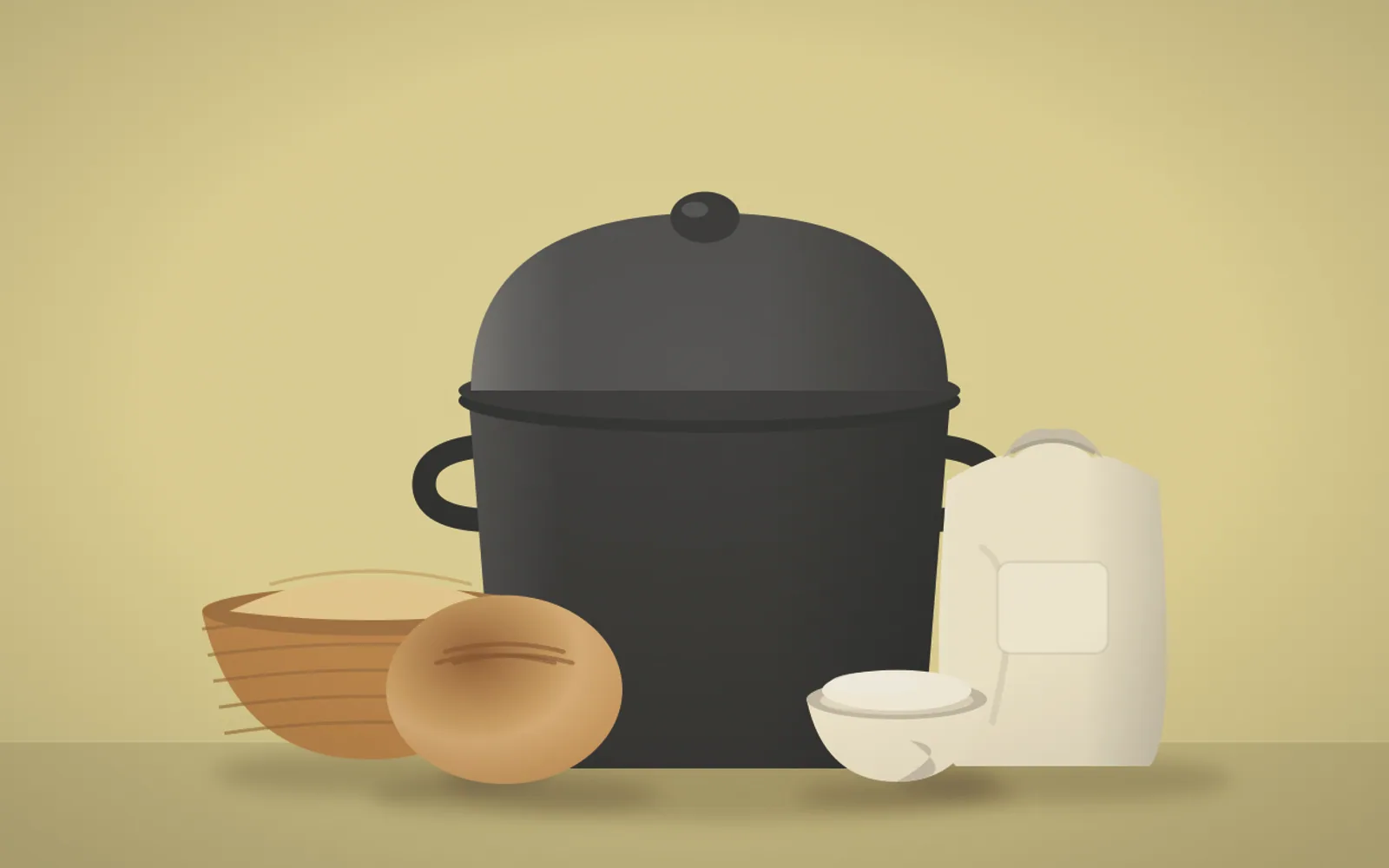
Baking in a covered pot is the home baker's trick for a crusty loaf. The closed pot traps the dough's own steam, which keeps the surface soft long enough to rise fully before the crust sets, then the lid comes off to brown and crisp it. Scoring the top with a blade controls where the loaf expands.
Most people fail their first loaf or two, producing dense bricks while they learn to read the dough and time the ferment. The honest reality is that sourdough rewards patience and observation over precision, and it cannot be rushed. But the ingredients cost almost nothing, the skill deepens for years, and a good homemade loaf is genuinely better than most bought bread.
How it works
The starter is the living heart of sourdough, and feeding it correctly is the practice that everything else depends on. A starter is just flour and water colonised by wild yeast and bacteria, and it needs regular feeding to stay strong. Discard most of it and refresh with equal weights of flour and water daily at room temperature until it doubles reliably within four to six hours of feeding.
The float test tells you it is ready to bake with. Drop a teaspoon of starter into water; if it floats, it is full of gas and active enough to raise a loaf. If it sinks, feed it again and wait. This single check saves you from baking with an underpowered starter that gives a dense brick.
The dough itself follows a long, slow rhythm. Mix flour, water, starter, and salt, then build strength not by kneading but by a series of stretch-and-folds over the first few hours, which develops the gluten gently. Then comes bulk fermentation, where the dough rises slowly over four to six hours, and you watch the dough rather than the clock.
Shape it, prove it cold in the fridge overnight for flavour and easier handling, then bake in a preheated Dutch oven at around 230°C. The lid traps steam for the first part, which lets the loaf expand fully before the crust sets.
Benefits
What you need
Here's what to gather before you start. The essentials are marked.
Some links below are affiliate links. As an Amazon Associate, trylii.com earns from qualifying purchases, at no extra cost to you.
FAQs
Flour and water, fed daily until it's alive and bubbly. I mix equal weights of flour and water in a jar, leave it loosely covered at room temperature, and discard half then feed it fresh flour and water every day. After about a week to ten days it becomes active, doubling and smelling pleasantly sour. The wild yeast and bacteria come from the flour and air, so no commercial yeast is needed.
Usually it's too cold, or it just needs more time. Starters are slow, and a cool kitchen can push the timeline past a week, so warmth helps a lot, around 24-26°C. There's often a false start around day two or three with early bubbles that then go quiet, which is normal, so keep feeding through it. Using unbleached or wholemeal flour and unchlorinated water also helps it get going.
When it reliably doubles within 4-6 hours of feeding and floats. A ripe starter rises predictably, looks domed and bubbly, and a spoonful dropped in water tends to float because it's full of gas. I feed it, watch it peak, and use it at its high point. If it's sluggish or sinking, it needs a few more days of feeding before it'll raise a loaf.
Usually under-proofing, a weak starter, or not enough strength built into the dough. Sourdough rises slowly, so rushing the bulk ferment leaves it dense, while an immature starter can't lift the loaf. I make sure the starter is at peak, give the dough enough time to roughly double during bulk ferment, and build structure with stretch-and-folds. Cutting into it before it's fully cooled also makes the crumb seem gummy.
Most of two days, though hands-on time is short. Day one is feeding the starter and the long bulk fermentation, day two is shaping, a cold proof in the fridge overnight, then baking. The total elapsed time is long because fermentation is slow, but actual work is maybe 30 minutes spread out. Sourdough rewards patience over effort, which suits a slow weekend.
It helps enormously but isn't strictly required. A preheated cast iron Dutch oven traps steam around the loaf, which gives that crackly crust and good oven spring, and it's the easiest way to get bakery-style results at home. Without one, you can create steam with a tray of water or an oven-safe dish, though the crust is usually less dramatic. I'd say it's the single most worthwhile bit of kit for sourdough.
You might also like
 KITCHEN
Sheet pan roasting techniques
KITCHEN
Sheet pan roasting techniques
 KITCHEN
Retro punch recipes
KITCHEN
Retro punch recipes
 KITCHEN
Charcuterie board arranging
KITCHEN
Charcuterie board arranging
 KITCHEN
Pickling vegetables
KITCHEN
Pickling vegetables
 KITCHEN
Hot chocolate gift jars
KITCHEN
Hot chocolate gift jars
 KITCHEN
Cold brew coffee craft
KITCHEN
Cold brew coffee craft
 KITCHEN
Nut brittle making
KITCHEN
Nut brittle making
 KITCHEN
Banana peel bacon
KITCHEN
Banana peel bacon
 KITCHEN
Old-fashioned bread pudding
KITCHEN
Old-fashioned bread pudding
 KITCHEN
Foraging elderberries
KITCHEN
Foraging elderberries
 COLLECT
Antique key collecting
COLLECT
Antique key collecting
 MIND
Rebus puzzle making
See all in In the Kitchen
MIND
Rebus puzzle making
See all in In the Kitchen