Building an evening wind-down ritual
CostFree to Low
Includes: herbal teas, a journal, and items you already own Example: herbal teas €3-8, a simple journal €5-10; most of the ritual is free.
What it is
Switching off a laptop does not switch off a mind that's been running all day. That gap between the last task and actual sleep is what an evening wind-down ritual fills. It's a deliberately built sequence of calming activities in the hour or so before bed, a personal protocol that quietly tells your nervous system the day is over and rest is coming.
The structure matters more than the specifics. The same handful of actions, in roughly the same order, at roughly the same time, becomes a cue your body learns to read. Dimming the lights. A warm shower. Putting the phone in another room. Ten minutes of reading something undemanding on paper. The brain treats these repeated signals like a runway, lining up the descent into sleep.
The science behind it is solid. Bright light, especially the blue-heavy light from screens, suppresses melatonin, the hormone that rises in the evening to make you drowsy. A wind-down ritual mostly works by removing those interferences and adding consistency. Sleep researchers consistently rank a regular pre-sleep routine among the most effective non-drug interventions for falling asleep faster.
Most people start by picking three things they already find calming and doing them in the same order for a week. The hard part isn't designing the ritual. It's protecting the hour from the pull of one more episode or one last email. That's the real discipline, and it takes a few weeks to hold.
How it works
Pick a fixed end-time for the day's stimulation before you design anything else, because the whole ritual is built backward from there. If you want to be asleep by eleven, the wind-down starts around ten, and everything bright, fast, or demanding needs to be finished by then. Without that anchor point, the routine drifts and nothing signals to the body that the day is closing.
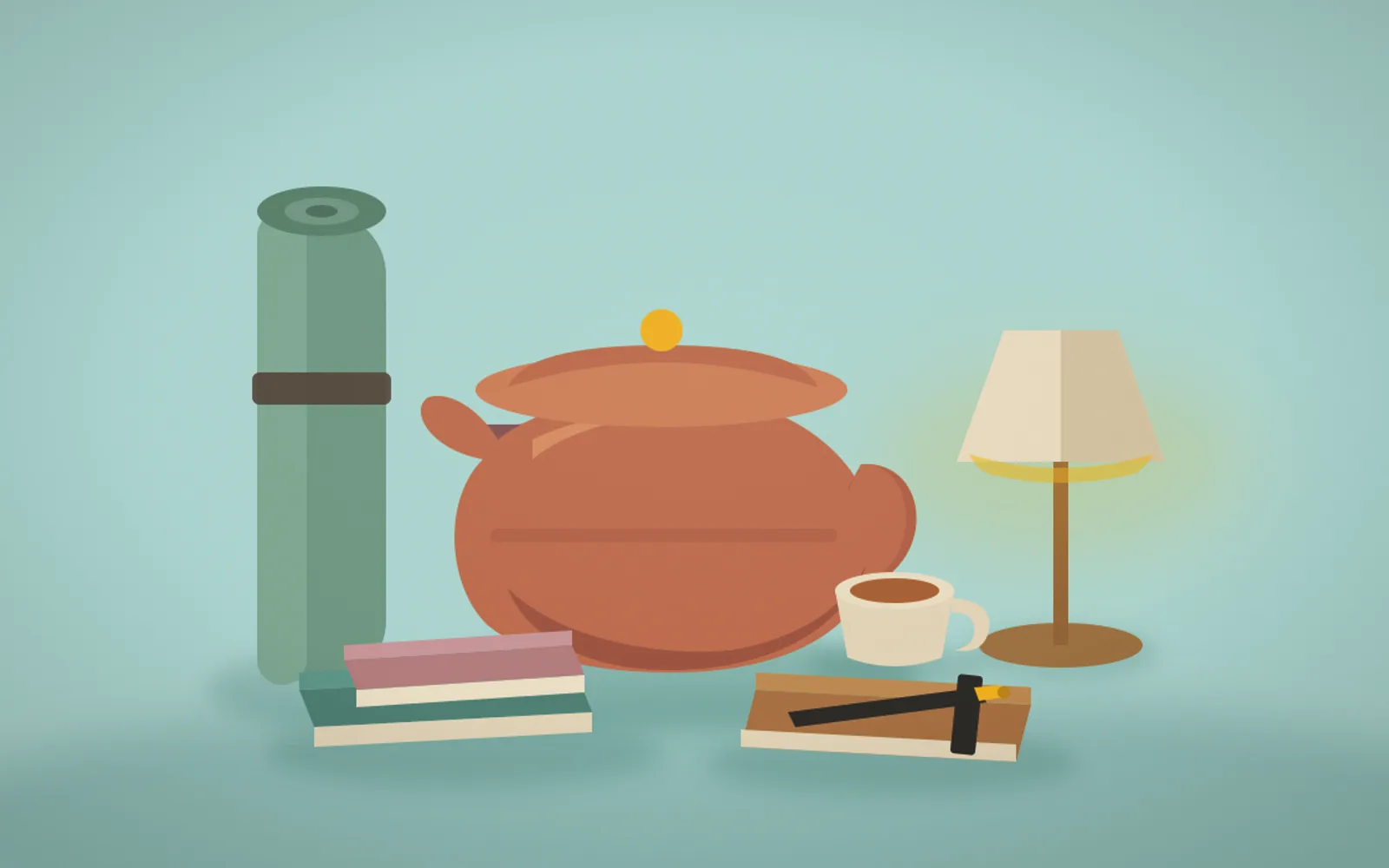
The ritual works through repetition and consistent cues, so choose a small handful of calming actions and do the same ones in the same order every night. A workable sequence might be: dim the main lights and switch to a single warm lamp, take a warm shower, change into sleep clothes, put the phone on charge in another room, then read something undemanding on paper for fifteen minutes. The specific actions matter far less than the consistency. After a week or two, the first action becomes a trigger that starts the whole descent automatically.
The lighting is the piece most people underestimate. Bright, blue-heavy light from overhead bulbs and screens suppresses melatonin, the hormone that should be rising in the evening to make you drowsy. Switching to dim, warm light an hour before bed removes that interference. A warm shower helps for a different reason: the body cools afterward, and that drop in core temperature is itself a sleep trigger.
The hard part is not building the ritual. It is defending the hour from one more episode or one last email. That protection is the actual practice, and it takes a few weeks of deliberate effort before it holds on its own.
Benefits
What you need
Here's what to gather before you start. The essentials are marked.
Some links below are affiliate links. As an Amazon Associate, trylii.com earns from qualifying purchases, at no extra cost to you.
FAQs
Begin about sixty to ninety minutes before you want to be asleep. The body does not switch from busy to sleepy on command, so it needs a runway. Use that window to dim lights, lower the temperature slightly, and step away from anything stimulating. Thirty minutes is the bare minimum that does anything. An hour gives the nervous system enough time to actually downshift.
Consistency, more than any specific activity. The body learns cues through repetition, so doing the same sequence in the same order each night trains it to expect sleep. Pick three or four small steps you can repeat every night without effort. A grand ritual you do twice and abandon helps less than a boring one you actually keep. The predictability is the active ingredient.
You do not have to ban it, but the screen and the content both work against you. The blue light suppresses melatonin, and the bigger problem is that scrolling keeps your mind engaged when it needs to disengage. If a full ban feels unrealistic, switch to a dimmed warm screen and swap social media for something genuinely calming. Putting the phone to charge in another room removes the temptation entirely, which is why it works.
Anything low-stimulation that signals the day is ending. Reading a paper book, gentle stretching, a warm shower, herbal tea, journaling, or a few minutes of slow breathing all work. A warm shower or bath about ninety minutes before bed is particularly effective, because the drop in body temperature afterward mimics the natural cooling that triggers sleepiness. Pick things you find genuinely pleasant, or you will not keep them up.
It helps, because the racing usually means the day's mental load had nowhere to go. A wind-down gives it somewhere. Try a "brain dump" twenty minutes before bed: write down every loose thought, worry, and task for tomorrow on paper. Getting them out of your head and onto the page tells the brain it can stop rehearsing them. Pair that with slow breathing once you are in bed and the noise tends to settle.
Around two to three weeks of doing it nightly. The first week feels like effort and a bit forced. By the second week the cues start to land, and you may notice yourself getting drowsy partway through without trying. Skipping nights resets the learning, so the early consistency matters most. Once it is established, the ritual becomes something you look forward to rather than a task.
You might also like
 BODY
Legs-up-the-wall practice
BODY
Legs-up-the-wall practice
 BODY
Creating seasonal bath blends
BODY
Creating seasonal bath blends
 BODY
Lymphatic movement sequences
BODY
Lymphatic movement sequences
 BODY
Mindful eating practice
BODY
Mindful eating practice
 BODY
Building a nature altar for the season
BODY
Building a nature altar for the season
 BODY
Aromatherapy roller blending
BODY
Aromatherapy roller blending
 BODY
Journaling for restful sleep
BODY
Journaling for restful sleep
 BODY
Breath-led stretching
BODY
Breath-led stretching
 BODY
Dry brushing routine
BODY
Dry brushing routine
 BODY
DIY hair oiling ritual
BODY
DIY hair oiling ritual
 MIND
Digital declutter routine
MIND
Digital declutter routine
 TOGETHER
Pasta from scratch together
See all in Body & Being
TOGETHER
Pasta from scratch together
See all in Body & Being