Designing repeat patterns (for fabric / paper)
CostLow
Includes: drawing tools, digital apps (optional), test prints Example: Procreate ~€15 one-time; Affinity Designer ~€80; Photoshop subscription; test prints on Spoonflower start around €10–20 per swatch.
What it is
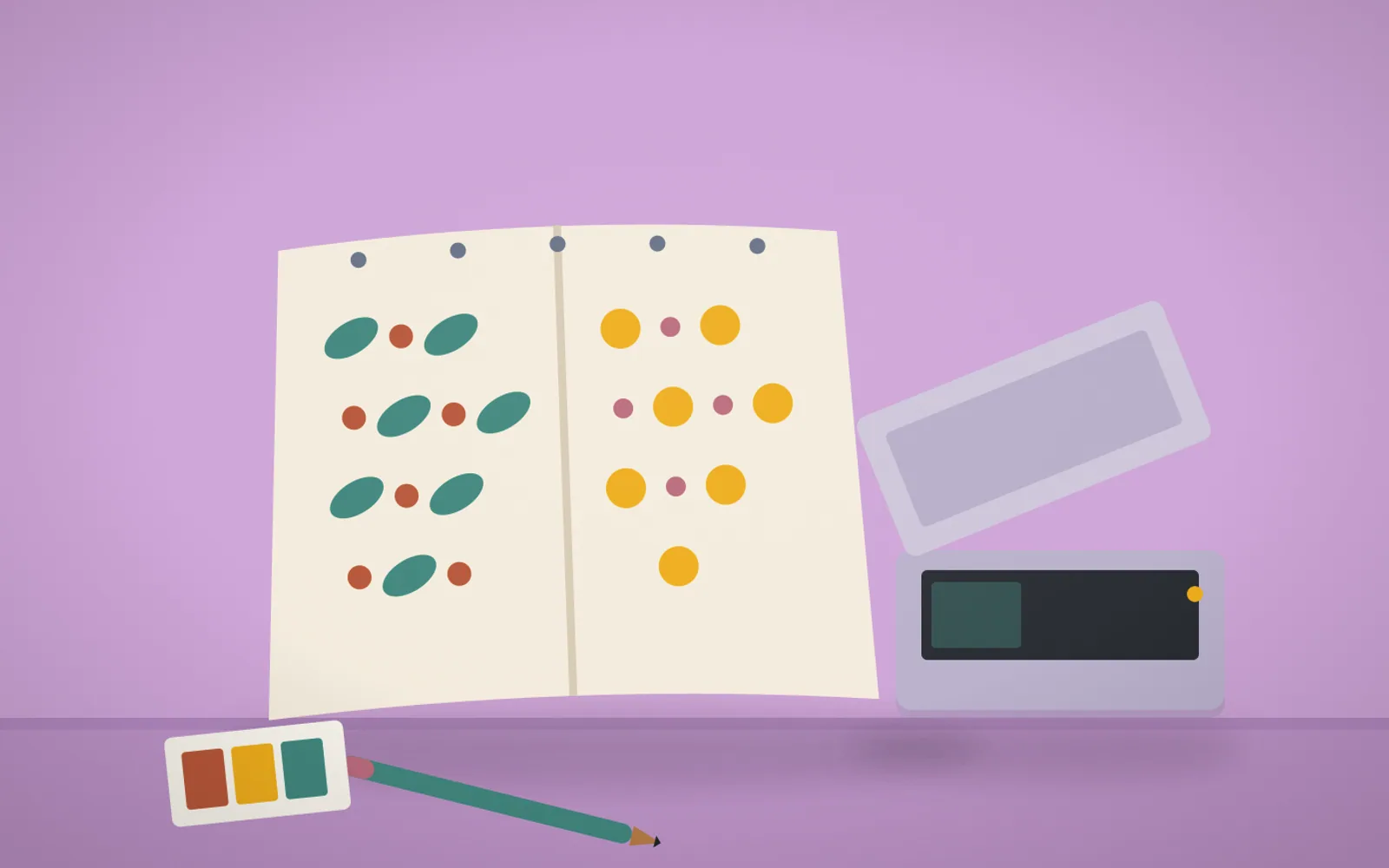
A repeat pattern has to do something almost magical: end exactly where it begins, so that when tiled across a surface, fabric, wallpaper, wrapping paper, the joins vanish completely and the design seems to go on forever with no visible seam. Designing one is a puzzle of making the edges disappear.
Designing repeat patterns is the practice of creating a single tile of artwork, a "repeat", that can be tiled with no visible joins in all directions to cover an unlimited surface, used for fabric, wallpaper, wrapping paper, packaging, and digital backgrounds. The defining challenge is the join: the design must be built so that when copies sit edge to edge, elements flow across the boundaries with no visible break. What looks like an endless, organic spread of motifs is actually one carefully engineered tile repeating.
The technical heart is the repeat itself. The classic method is the "half-drop" or "block" repeat, where anything running off one edge of the tile must reappear exactly on the opposite edge to continue the flow. Designers work this out either by hand, cutting a design in quarters and swapping the pieces to bring the edges to the centre where gaps show, or digitally with software that previews the tiling in real time. Once you start seeing them, the applications are everywhere: every patterned fabric, every roll of wallpaper began as someone's repeat tile, and designs can be sold to manufacturers, licensed, or printed on demand.
The skill that takes time is balance and flow across the whole repeat, not just at the seams. A pattern can tile perfectly yet still look wrong if motifs clump in some areas and leave others bare, creating unintended diagonal lines or blank patches when repeated across a large surface. Achieving an even, pleasing distribution that reads well both up close and from a distance is the mark of an experienced pattern designer.
How it works
The repeat is the entire technical puzzle, so understand it before drawing a single motif. A pattern tile must be built so that when copies sit edge to edge, anything running off one side reappears exactly on the opposite side, letting it cover an unlimited surface with no visible join. This is the rule that governs everything, and a beautiful design that ignores it shows ugly seams the moment it tiles. Plan for the join from the first mark, not as an afterthought.
The classic method is the half-drop or block repeat. In a block repeat, tiles line up in a grid. In a half-drop, every other column shifts down by half a tile, which disguises the grid and makes the repeat far harder for the eye to spot. The traditional hand technique cuts a design into quarters and swaps them so the outer edges meet in the centre, instantly revealing the gaps you then fill. Software like Photoshop, Procreate, or the dedicated Affinity tools previews the tiling live as you work.
Even distribution is the skill that takes longest to develop, because a pattern can tile perfectly and still look wrong. Motifs that clump in some areas and leave others bare create unintended diagonal lines, called tram lines, and blank patches across a large surface. Stepping back to view the design tiled small, as it will actually appear on fabric or paper, exposes these problems that are invisible up close. Spacing is half the work.
Benefits
What you need
Here's what to gather before you start. The essentials are marked.
Some links below are affiliate links. As an Amazon Associate, trylii.com earns from qualifying purchases, at no extra cost to you.
FAQs
A repeat pattern is a design that tiles with no visible joins, so it can cover any area (fabric, wrapping paper, wallpaper) where the tile edges meet. It is harder than a single design because elements that cross the edge of your tile must continue perfectly on the opposite edge, which takes planning. A drawing only has to work once; a repeat has to work infinitely in every direction, which is the real puzzle.
Through the half-drop or offset method, where anything leaving one edge re-enters the opposite edge. The classic technique is to design a tile, then cut it and swap the halves (or quarters) so the original outer edges meet in the centre, revealing the gaps you need to fill, and crucially you never draw across the new outer edges. Software automates this, but understanding the manual version is what makes the digital tools make sense.
It helps a lot, though you can start simply. Adobe Illustrator and Photoshop have pattern tools that handle the repeat mechanics for you, and Affinity Designer (a €70 one-off) is a cheaper alternative. Procreate can build repeats too. You can even design a tile by hand, scan it, and tile it in basic software. The software's value is letting you preview the full repeat instantly, since spotting awkward gaps or unwanted lines (called 'tram lines') is hard from the single tile alone.
Uneven spacing of elements, the most common repeat problem. When motifs cluster in some areas and leave others empty, the eye joins the gaps into distracting diagonal 'tram lines' across the repeat. The fix is distributing elements evenly across the whole tile, varying their angle and size, and filling empty zones with smaller filler motifs. Always preview the full tiled repeat, not just the single tile, because these lines only appear once it multiplies.
Yes, easily, through print-on-demand services. Sites like Spoonflower print your design onto fabric, wallpaper, and gift wrap with no minimum order, so you can order a single test swatch (a few euros) to check colour and scale before committing. This lets you hold your own designed fabric without setting up any manufacturing. Ordering a small test first is worth it, because colours and the scale of the repeat often look different printed than they do on screen.
You might also like
 VISUAL
Altered book art
VISUAL
Altered book art
 VISUAL
Zine comics
VISUAL
Zine comics
 VISUAL
Creating photo-based art prints
VISUAL
Creating photo-based art prints
 VISUAL
Cyanotype sun printing
VISUAL
Cyanotype sun printing
 VISUAL
Illustrated story cards
VISUAL
Illustrated story cards
 VISUAL
Typography design
VISUAL
Typography design
 VISUAL
Digital scrapbooking
VISUAL
Digital scrapbooking
 VISUAL
Creating digital mood boards
VISUAL
Creating digital mood boards
 VISUAL
Manga character design
VISUAL
Manga character design
 VISUAL
Motion graphics play (GIF making)
VISUAL
Motion graphics play (GIF making)
 TOGETHER
Build-your-own ramen bar
TOGETHER
Build-your-own ramen bar
 TOGETHER
Music jam sessions at home
See all in Visual & Digital Arts
TOGETHER
Music jam sessions at home
See all in Visual & Digital Arts