Family orienteering morning
CostFree to Low
Includes: Free permanent courses, or printed materials and marker tape for DIY. Example: Permanent courses are completely free. A DIY setup costs €5–10 for printed materials and marker tape.
What it is
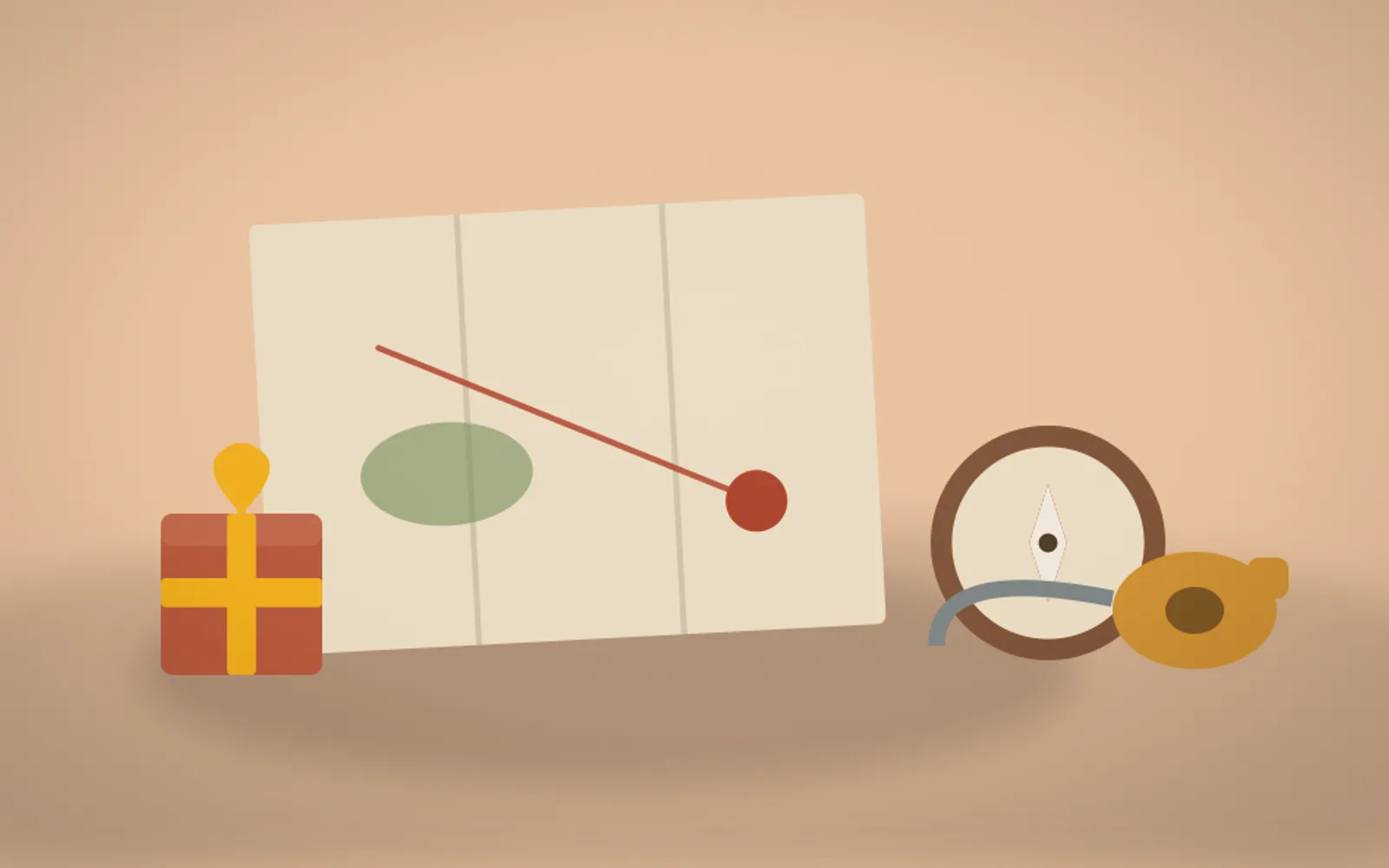
Permanent orienteering courses already exist in parks and forests across most of Europe. The map is downloadable, the control markers are always in place, and a family can start this weekend with no preparation and no cost. That accessibility is what makes a family orienteering morning such an easy first adventure.
It's an outdoor navigation activity where a parent or organiser sets up a simple map-and-clue course in a local green space, and families work together to navigate between checkpoints in sequence. It's a child-friendly introduction to the real sport, developing spatial skills, map-reading, and outdoor confidence inside a game.
The appeal is the shared navigating rather than the competition. The older child helps orient the map, the younger child spots the orange flag, the parent makes the route decisions, everyone contributes something. It's one of the rare outdoor activities that's simultaneously educational and genuinely exciting, because the combination of physical movement and navigation puzzle produces an engagement that pure walking or pure puzzle-solving rarely matches.
For young children, a themed framing transforms it. Present the course as a treasure hunt with a small reward at the final checkpoint, and the same navigation becomes an adventure rather than exercise.
How it works
A downloadable permanent course is the easiest possible starting point, so check for one before building anything yourself. Most national orienteering federations maintain free permanent courses in accessible parks and forests, with the map online and the control markers always in place. Print the map, read the control descriptions, and navigate as a family to each numbered post in sequence.
For a DIY version, walk the park beforehand and design a six-to-eight-point course. Draw a simple map marking distinct landmarks, the big tree, the bench, the pond, the car park, and write a clue for each location. Set numbered markers, orange tape or laminated numbers, in advance, then hand out the map and let the family navigate between them.
The collaboration is the point. The older child orients the map, the younger one spots the markers, the adult makes the route calls, and everyone contributes a different skill toward the same goal.
Benefits
What you need
Here's what to gather before you start. The essentials are marked.
FAQs
A map, a way to navigate, and a set of points to find. For a proper version you want an orienteering map and a compass, but a family morning can run on a local park map, a phone compass, and a printed list of checkpoints you have set yourself. Many parks and forests have permanent orienteering courses with markers already in place; a quick search for one near you saves all the setup.
Start with the map flat and "set" to the ground, so what is ahead of them is ahead on the map. Orienting the map to match reality is the single concept that makes everything click for beginners. Teach them to spot big features first (a pond, a path junction, a building) and match them to the map before worrying about the compass. The compass comes in for direction; the map-reading is the real skill, and kids pick it up fast as a treasure hunt.
Stop, stay put if separated, and use known features to relocate. Getting briefly disoriented is normal and part of learning, so the rule is not to keep wandering hopefully but to stop and work out where you are from the nearest obvious landmark. Agree a meeting point and a turn-back time before you start, keep younger children with an adult, and carry a phone. For a first outing, choose a contained area like a single park where you cannot stray far.
Suitable from surprisingly young, scaled right. Little ones do a "string course," following a marked line between close-together points, while older children handle real navigation between checkpoints. Turning it into finding hidden markers or stamps makes it a game rather than a lesson, and children who would moan about a plain walk will happily run a kilometre hunting for the next control point. Keep distances short and the finds frequent for the youngest.
You might also like
 TOGETHER
Seasonal family traditions
TOGETHER
Seasonal family traditions
 TOGETHER
Nature art (leaf prints, rock painting)
TOGETHER
Nature art (leaf prints, rock painting)
 TOGETHER
Bunting/banner creation
TOGETHER
Bunting/banner creation
 TOGETHER
Group taco / nacho bar night
TOGETHER
Group taco / nacho bar night
 TOGETHER
Family film-making (short movies)
TOGETHER
Family film-making (short movies)
 TOGETHER
Backyard mini golf course
TOGETHER
Backyard mini golf course
 TOGETHER
Birthday tradition planning
TOGETHER
Birthday tradition planning
 TOGETHER
Draw-along art sessions
TOGETHER
Draw-along art sessions
 TOGETHER
DIY board game design
TOGETHER
DIY board game design
 TOGETHER
Gratitude jar (shared family ritual)
TOGETHER
Gratitude jar (shared family ritual)
 COLLECT
Adding lighting effects (fibre optics, LEDs) to scenic builds
COLLECT
Adding lighting effects (fibre optics, LEDs) to scenic builds
 VISUAL
Digital painting (with tablet)
See all in Together Time
VISUAL
Digital painting (with tablet)
See all in Together Time