Gentle yoga flow sequences
CostLow
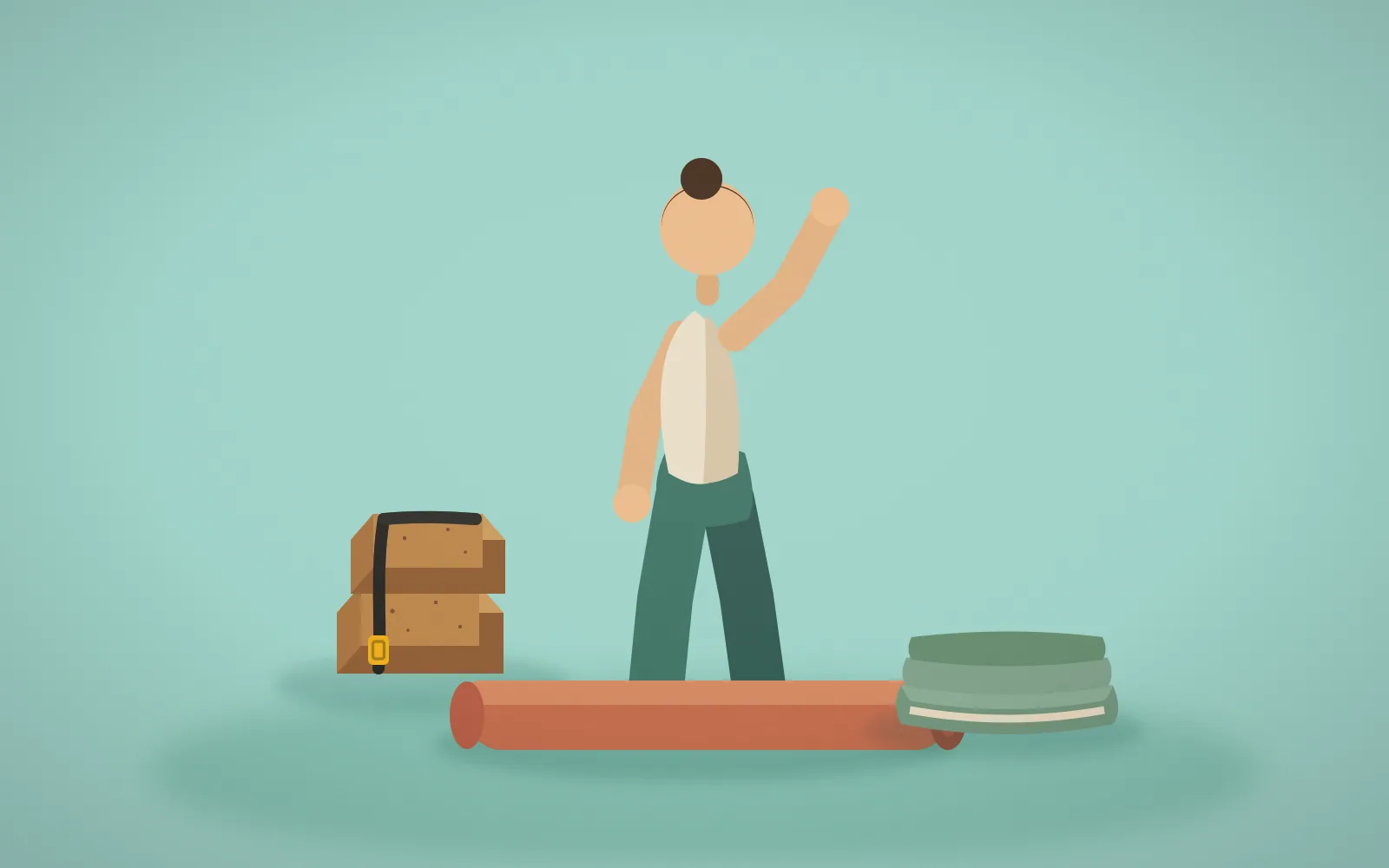
Includes: core materials, tools, or kits Example: most folks start with a basic yoga mat (€25–60) and might add a couple of blocks or a strap later (€15–30 each). Online classes are often free.
What it is
Halfway through a stressful week, most people don't think their body needs anything gentler than a hard workout. It often does. Gentle yoga flow is yoga stripped of the rush. No jumping, no sweating through your shirt, no competing with the person on the next mat. The whole point is giving your body room to move in a way that feels kind rather than punishing.
Some days that looks like five minutes of stretching on the floor before bed. Other days you might flow through a full half hour, linking one pose to the next with the breath. One inhale lifts the arms. One exhale folds you forward. Cat-cow, child's pose, a few easy spinal twists. Nothing here requires flexibility you don't already have, which is the part people get wrong about yoga generally.
You need almost nothing to begin. A mat helps, though a folded blanket on a carpet works fine for the first month. Adriene Mishler's free YouTube channel has hundreds of sessions sorted by length and mood, and it remains the easiest on-ramp I know of. The practice works considerably better than its low-effort reputation suggests, mostly because consistency beats intensity here. Ten minutes most days outperforms one heroic 90-minute class a fortnight.
How it works
Roll out the mat and stand at the top of it for a moment before moving. That pause is where the practice actually begins, because gentle flow runs on breath, and you want to find the breath before you find the first pose. Inhale through the nose for a count of four, exhale for four, and let that rhythm set the pace for everything that follows.
From there you link simple poses to the breath rather than holding them in isolation. A typical opening is a few rounds of cat-cow on hands and knees, arching on the inhale and rounding on the exhale, which warms the spine in about a minute. Move into child's pose, then a slow forward fold, then a gentle twist on each side. The rule that keeps it gentle is that the breath leads and the body follows. If you find yourself holding your breath to push deeper into a stretch, you have gone past gentle and into effort.
Most people make the same early mistake, which is treating it like a checklist of poses to get through. The flow is not the point. The transitions are. Moving slowly from one shape to the next, feeling the weight shift, is where the nervous system actually downshifts. A ten-minute sequence done slowly does more than a twenty-minute one rushed.
End lying flat on your back for two or three minutes, doing nothing. This final rest is the part beginners skip and the part that matters most, because it lets the body absorb what came before.
Benefits
What you need
Here's what to gather before you start. The essentials are marked.
Some links below are affiliate links. As an Amazon Associate, trylii.com earns from qualifying purchases, at no extra cost to you.
FAQs
Yes, and stiffness is the reason to start, not the reason to skip it. Gentle yoga is not about touching your toes. It moves your joints through the range they already have and widens it slowly. Most people notice easier hips and shoulders within four to six weeks of practising twice a week. Use blocks or a cushion under your hands in any forward fold, and the floor stops feeling so far away.
Fifteen minutes done most days beats one long class a fortnight. The body responds to frequency more than duration here. A simple structure works well: five minutes of breathing to arrive, twenty minutes of slow movement, five minutes lying still at the end. Yoga with Adriene lets you filter by length, so you can match the session to the time you actually have.
A non-slip mat matters more than you'd think. Bare floorboards are slippery in socks, and carpet gives your wrists and knees nothing to push against. A basic mat around 4mm thick (Liforme and Manduka are the long-lasting ones, but a €15 starter mat is fine for the first few months) is enough. A folded blanket on top helps if kneeling bothers you.
If it hurts in a joint, you're not. Stretch should feel like a broad pull through muscle, never a sharp pinch in a knee, hip, or lower back. Sharp means back off. Film yourself once on your phone and compare it to the instructor. The gap is usually smaller than it feels from the inside.
It changes things, just not dramatically and not fast. Expect better sleep and a looser back within a couple of weeks, and real mobility gains by week six. The slow pace is the point. People quit fast yoga because it feels like a workout they keep failing. Gentle flow is hard to fail, which is exactly why people keep going back to it.
You might also like
 BODY
Loving-kindness (Metta) meditation
BODY
Loving-kindness (Metta) meditation
 BODY
Hand and cuticle care ritual
BODY
Hand and cuticle care ritual
 BODY
Seated meditation practice
BODY
Seated meditation practice
 BODY
Candle gazing meditation
BODY
Candle gazing meditation
 BODY
Bullet journaling for life rhythm
BODY
Bullet journaling for life rhythm
 BODY
Herbal-infused body oils making
BODY
Herbal-infused body oils making
 BODY
Weekly self-review ritual
BODY
Weekly self-review ritual
 BODY
Freeform/ecstatic dance
BODY
Freeform/ecstatic dance
 BODY
Journaling for restful sleep
BODY
Journaling for restful sleep
 BODY
Seasonal reflection journaling
BODY
Seasonal reflection journaling
 BODY
Energy/mood mapping
BODY
Energy/mood mapping
 SKILL
Testing different materials for strength (fun science)
See all in Body & Being
SKILL
Testing different materials for strength (fun science)
See all in Body & Being