Herbal bath soaks blending
CostFree to Low
Includes: Epsom salts and dried herbs Example: Epsom salts €3-5/kg, dried herbs €10-20; a batch of 4-6 soaks costs under €10.
What it is
A handful of dried herbs scattered straight into a bath mostly just clogs the drain. The fix is older than plumbing: bundle them. Herbal bath soaks are blends of dried herbs, botanicals, salts, and oils combined into a loose mixture that goes into the bathwater, either tied in a muslin bag or steeped like a giant tea, to turn an ordinary bath into something aromatic and therapeutic.
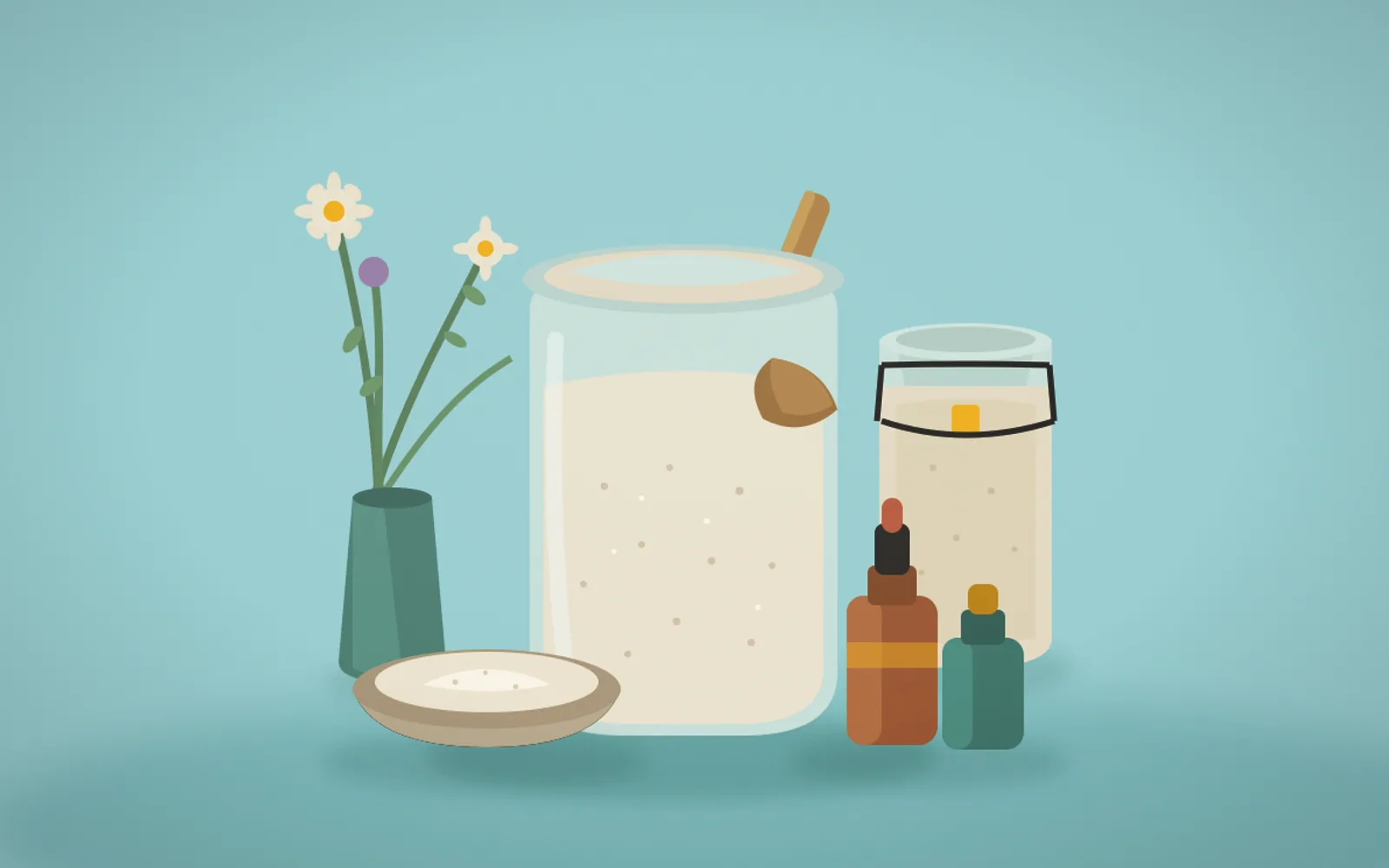
The blend has a logic to it. A salt base, usually Epsom salt or coarse sea salt, dissolves into the water and carries the rest. Dried herbs and flowers, lavender, calendula, rose petals, chamomile, rosemary, add scent and skin-soothing compounds. A few drops of carrier oil or essential oil round it out and leave the skin soft. You're building a recipe, balancing what smells good against what each ingredient does, and the fun is in the tuning.
The muslin bag detail matters more than it sounds. Loose petals look beautiful floating on the water and then refuse to leave the tub or the drain. A drawstring muslin bag, or even a clean sock in a pinch, holds the herbs while letting the water steep through them, so you get all the benefit and none of the cleanup. Most people learn this the hard way exactly once.
Starting is cheap and forgiving. A bag of Epsom salts costs a couple of euros and lasts for many baths, and you can buy small amounts of dried herbs to experiment. Most people begin with a simple lavender-and-salt mix before branching into more complex blends.
How it works
The base recipe is simple: a salt to carry everything, dried botanicals for scent and skin benefit, and a little oil to soften the water. A workable starting blend is one cup of Epsom salts, a quarter cup of dried herbs or flowers, and a teaspoon of carrier oil, scaled to taste. Mix the salt and dried botanicals together dry in a bowl first, then stir the oil through last so it coats everything lightly.
The herb choice is where you make it yours. Lavender and chamomile for calm, rose petals for a gentle floral scent, calendula for soothing the skin, rosemary for something more reviving. You are balancing what smells good against what each plant does, and half the pleasure is in the tuning. A few drops of an essential oil can reinforce the scent of the dried herbs, since dried botanicals alone sometimes smell fainter in hot water than you expect.
Now the detail that saves you a miserable cleanup: contain the herbs. Loose petals look lovely floating on the water and then absolutely refuse to leave the tub, clinging to skin and clogging the drain. The fix is to spoon the blend into a drawstring muslin bag, or a clean sock at a pinch, and let the bathwater steep through it like an enormous tea bag. You get all the benefit and none of the mess. Most people learn this the hard way exactly once before switching to a bag forever.
Epsom salt is the standard base because it dissolves cleanly and is cheap, a couple of euros for a bag that lasts many baths. Coarse sea salt works too but dissolves more slowly. Start with a simple lavender-and-salt mix to learn the proportions before building more complex blends.
Benefits
What you need
Here's what to gather before you start. The essentials are marked.
Some links below are affiliate links. As an Amazon Associate, trylii.com earns from qualifying purchases, at no extra cost to you.
FAQs
A good soak combines a salt base with herbs and sometimes a little oil. A reliable starting ratio is two cups of Epsom salt, half a cup of a fine salt like Himalayan or dead sea salt, and a half to one cup of dried herbs per bath. The Epsom salt (magnesium sulphate) is the muscle-relaxing workhorse, the finer salt adds minerals, and the herbs bring scent and skin benefits. Keep it simple at first and adjust once you know what you like.
Contain them, which is the single most useful trick. Loose herbs float, stick to skin, and block plugholes. Tie your dried herbs in a muslin bag, a large tea filter, or even an old (clean) sock knotted at the top, and let it steep in the bathwater like a giant teabag. You get all the scent and benefit with none of the mess. Salts dissolve freely, so only the herbs need bagging.
Lavender for relaxation, chamomile and calendula for soothing the skin, rose for scent, and oats for itchy or irritated skin. Colloidal oatmeal (oats ground to a fine powder) is genuinely excellent for dry, sensitive, or eczema-prone skin and dissolves into a silky, milky bath. Eucalyptus and peppermint are bracing rather than calming, good for a cold or a morning soak. Match the herb to the mood you want, since they pull in quite different directions.
You can, but dilute them first or they will sit on the water and irritate skin. Never drop neat essential oil into a bath, since oil and water do not mix and the undiluted oil contacts skin directly. Mix three to six drops into a tablespoon of carrier oil, a little milk, or a handful of your salt base before adding it to the water. Skip the hot, irritating ones like cinnamon and clove entirely.
Mostly, with sensible caution. Keep the water comfortably warm rather than hot during pregnancy, and avoid certain essential oils and herbs that are not recommended, so check each one. For sensitive skin, patch test any new herb or oil on your inner arm first and lean toward the gentle soothers like oats and calendula. Plain Epsom salt with oatmeal is a safe, calming default if you are unsure where to start.
⚠️ Safety note: Some herbs and essential oils are not recommended during pregnancy. Check each ingredient, keep bath water warm rather than hot, and patch test new ingredients if you have sensitive skin.
You might also like
 BODY
Morning pages writing
BODY
Morning pages writing
 BODY
Five senses grounding exercise
BODY
Five senses grounding exercise
 BODY
Loving-kindness (Metta) meditation
BODY
Loving-kindness (Metta) meditation
 BODY
Progressive muscle relaxation
BODY
Progressive muscle relaxation
 BODY
DIY hair oiling ritual
BODY
DIY hair oiling ritual
 BODY
Mandala colouring for mindfulness
BODY
Mandala colouring for mindfulness
 BODY
Weighted blanket rest ritual
BODY
Weighted blanket rest ritual
 BODY
Digital sunset routine
BODY
Digital sunset routine
 BODY
Candle gazing meditation
BODY
Candle gazing meditation
 BODY
Dry brushing routine
BODY
Dry brushing routine
 KITCHEN
Sheet pan roasting techniques
KITCHEN
Sheet pan roasting techniques
 WILD
Fishing
See all in Body & Being
WILD
Fishing
See all in Body & Being