Journaling
CostLow
Includes: Notebook or journal, pens, optional stickers or prompts Example: Blank notebook + pen set, digital journaling app
What it is
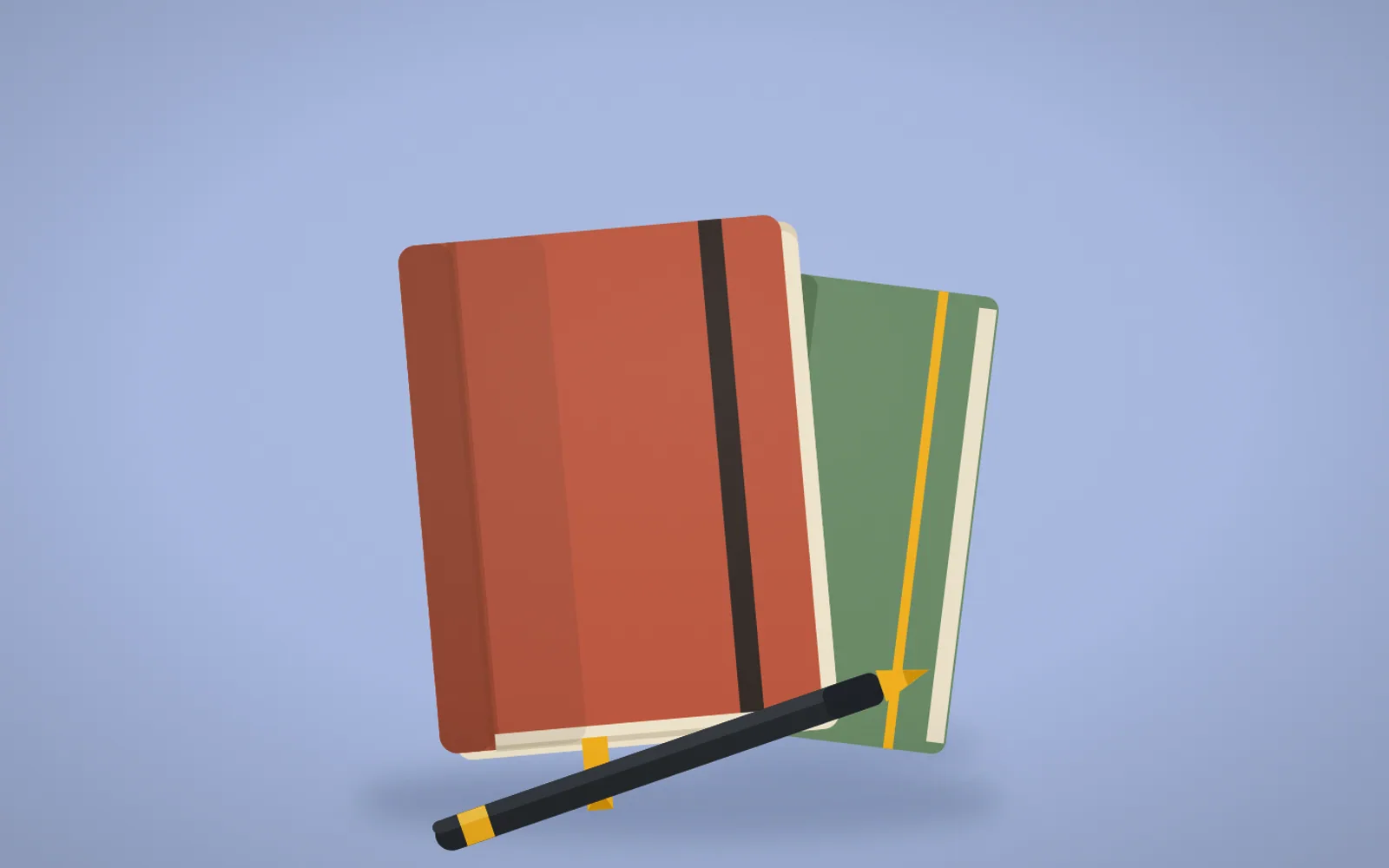
Last thing at night, with the lamp still on and the day still rattling around your head, a notebook does something a phone never quite manages. It catches the noise. Journaling is the practice of putting your thoughts somewhere outside your skull, in writing, so they stop circling. It is not a diary in the locked-and-pink sense, though it can be. It can be a few lines about what happened, a list of worries, a half-formed idea, or three pages of nonsense you never read again. The point is the act, not the artefact.
Most people start expecting profundity and discover that the useful stuff is mundane. You write that you slept badly three nights running, and suddenly the bad mood has a cause. You scribble the same complaint for the fourth week and realise it is time to actually do something. The page does not judge and does not interrupt, which makes it better company than most. The learning curve is basically zero. If you can write a shopping list, you can journal, and honestly the shopping-list energy is often the right starting point.
How it works
Open a notebook, put the date at the top, and write the first true sentence that comes to mind. That is the entire mechanism. There is no correct format, which trips people up more than any technical difficulty. Some write a single line, some fill three pages, and both count. The date matters more than people expect, because months later the entries become a record you can actually navigate rather than a loose pile of undated thoughts.
What separates a journal that survives from one abandoned by February is lowering the bar far enough that you write on the bad days too. A notebook left by the bed or the coffee machine gets used. One in a drawer does not. Most people who quit do so because they decided journaling had to be profound, then froze at the blank page. Write the boring stuff. The slept badly, ate too much, annoyed at work stuff. The useful patterns only show up across weeks of mundane entries, not in a single brilliant one.
Benefits
What you need
Here's what to gather before you start. The essentials are marked.
Some links below are affiliate links. As an Amazon Associate, trylii.com earns from qualifying purchases, at no extra cost to you.
FAQs
Any one will do. The notebook does not change whether the practice works. That said, a cheap notebook you actually open beats a beautiful one you are scared to ruin. If you want a recommendation, a plain A5 with a lay-flat binding (the Leuchtturm1917 or a basic Moleskine cahier) survives daily use without falling apart. Start with whatever is in the drawer.
As long or short as the day needs. Some days you write half a page, some days one line. There is no minimum that makes it count. The myth that journaling means three reflective pages every morning puts more people off than almost anything else. A single honest sentence is a real entry.
Start with the most boring true thing. What you ate, how you slept, what is annoying you right now. The boring sentence unlocks the next one, and the next one is usually the one that mattered. Trying to begin with something profound is the fastest way to stall.
That worry alone changes what you write, so deal with it directly. Keep the notebook somewhere private, or use a password-protected app if a physical book feels too exposed. Some people write knowing they will tear the page out afterwards. The freedom to be unfiltered is most of the value, so protect it however you need to.
Both work, and the best one is the one you will actually use. There is some evidence that handwriting slows you down in a way that aids reflection, and a screen carries the constant pull of notifications. But a journaling app you open every night beats a beautiful notebook you never reach for. If the phone is always in your hand anyway, a notes app removes every barrier to starting.
You might also like
 MIND
DIY quiz creation (writing your own quizzes!)
MIND
DIY quiz creation (writing your own quizzes!)
 MIND
Puzzle solving (jigsaw, Sudoku)
MIND
Puzzle solving (jigsaw, Sudoku)
 MIND
Morning ritual crafting
MIND
Morning ritual crafting
 MIND
Yearly life audit reviews
MIND
Yearly life audit reviews
 MIND
Anagram challenges
MIND
Anagram challenges
 MIND
Slitherlink puzzles
MIND
Slitherlink puzzles
 MIND
Chess
MIND
Chess
 MIND
Trivia challenges
MIND
Trivia challenges
 MIND
Personal challenges & goal tracking
MIND
Personal challenges & goal tracking
 MIND
Nonograms (picross)
MIND
Nonograms (picross)
 HOME
Building a tool wall
HOME
Building a tool wall
 HOME
Homemade Pet Shampoo
See all in Mind at Play
HOME
Homemade Pet Shampoo
See all in Mind at Play