DIY wreaths for the seasons
CostLow
Includes: wire frame or grapevine base, floral wire, seasonal materials Example: grapevine bases from €5-15; seasonal craft materials €10-30; many elements can be foraged or repurposed
What it is
A walk in late autumn turns up everything a wreath needs: fallen pine cones, seed heads, bare twigs, the last of the berries. Gathered into a ring on the front door, they cost nothing and announce the season better than anything shop-bought.
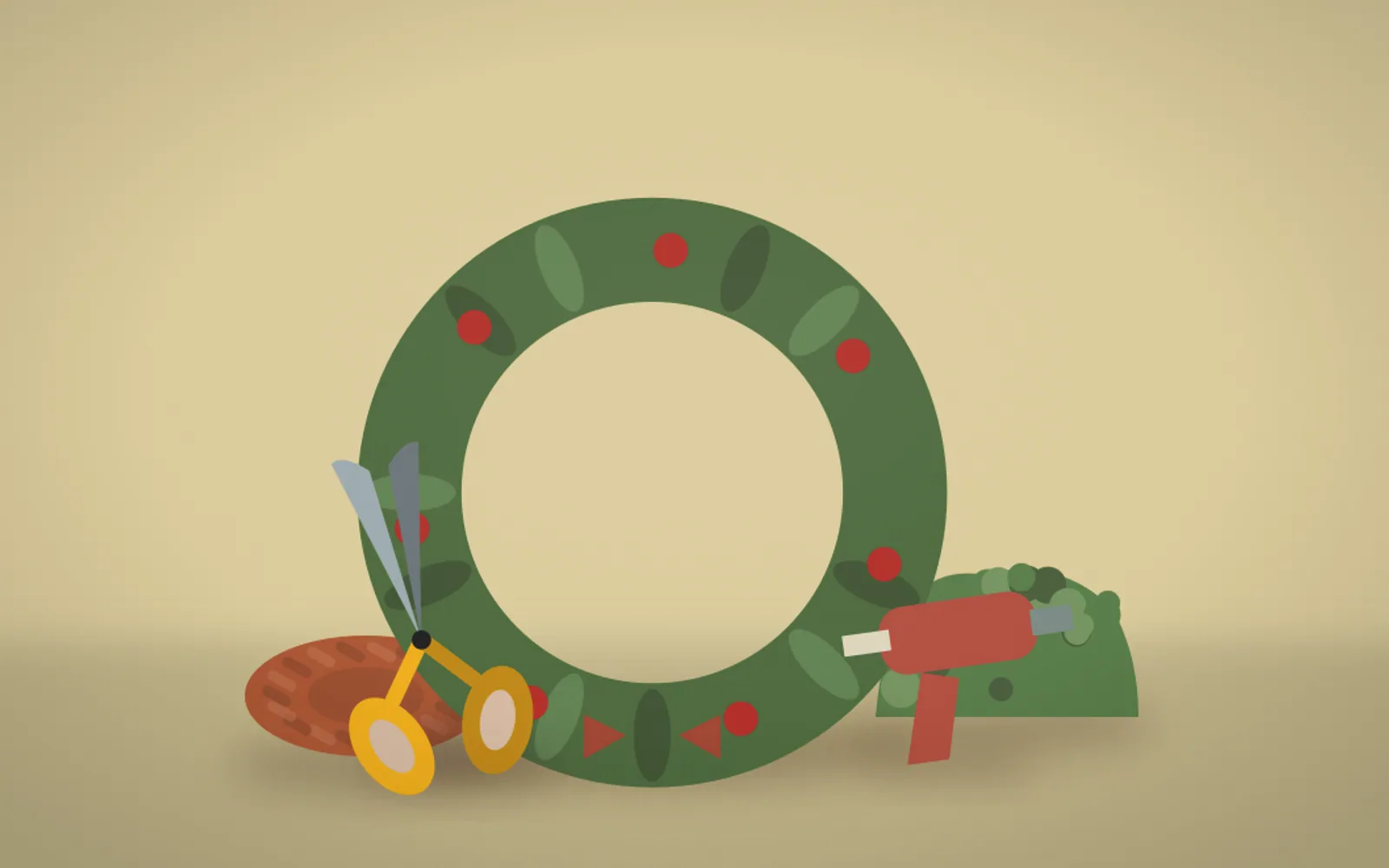
DIY wreaths for the seasons means making decorative rings for the door or wall that change through the year: fresh evergreens and berries for winter, blossom and pastels for spring, dried grasses and wildflowers for summer, foliage and seed heads for autumn. You start with a base, a wire ring, a willow or grapevine circle, a foam form, and attach materials around it until the ring is covered. It marks the turning of the year on the threshold of the home, a small ritual of seasonal decoration.
The base you choose shapes the whole project. A wire frame is cheap and reusable, ideal for binding on fresh foliage that you will replace each season. A grapevine or willow wreath is a beautiful natural base in its own right, lovely with just a few decorations wired on. A foam ring suits dried and artificial materials pushed straight in. Fresh evergreen wreaths last longest if the foliage base is built onto damp moss bound to the frame, which keeps the greenery from drying and dropping too quickly.
The pleasure of seasonal wreaths is that the materials are so often free and local. Hedgerow foraging in autumn, prunings from the garden, pine cones from a winter walk, dried flowers saved from summer, all become decoration. A wire base used year after year, redressed each season, makes this one of the most sustainable decorations there is, the same frame carrying spring blossom, summer grasses, autumn seed heads, and winter holly in turn. Foraging responsibly, taking only a little and never stripping a plant or trespassing, keeps the tradition kind to the places that supply it.
How it works
A wire or willow ring is the base that frames every wreath, and how you attach material to it decides the whole method. Floristry wire wrapped continuously around the frame holds fresh foliage, a glue gun fixes dried and artificial elements, and simply tucking and weaving stems through a woven willow or grapevine base needs no fixing at all for a loose natural look.
Build it in bundles, not single stems, working in one direction. Small clusters of foliage wired or tucked so each bundle hides the stems of the last, all facing the same way around the ring, is what gives a wreath its full, even, professional look. Working stem by stem leaves gaps and a thin, patchy result, where overlapping bundles build depth.
Match the materials to the season, which is the whole charm of a changing wreath. Spring takes blossom, fresh willow, and faux tulips, summer takes bright silk flowers and greenery, autumn takes dried seedheads, wheat, and orange hues, and winter takes evergreen, pinecones, cinnamon, and berries. A plain evergreen or grapevine base can be redecorated each season rather than rebuilt.
Benefits
What you need
Here's what to gather before you start. The essentials are marked.
Some links below are affiliate links. As an Amazon Associate, trylii.com earns from qualifying purchases, at no extra cost to you.
FAQs
You can make one for free from what you gather. A walk in late autumn turns up everything a wreath needs, and bendy prunings like willow, dogwood, or grapevine twist straight into a circular base, no shop ring required. I bend a few lengths into a ring, weave the ends in to hold it, and build from there. A bought wire or foam ring is handy but optional.
Use hardy foliage and, for fresh greenery, keep it cool and damp. Evergreens like pine, fir, eucalyptus, and holly last for weeks because they hold moisture and do not wilt fast. I mist a fresh wreath occasionally and keep it out of direct heat. For a wreath that lasts indefinitely, dried materials like seed heads, cones, and twigs never wilt at all.
Florist's wire for the heavy bits, hot glue for the light ones. I wire on pine cones, bundles of foliage, and anything with weight, since wire grips firmly and survives the door swinging, while a glue gun is quicker for dried flowers, berries, and small decorative pieces. Building in small bundles wired on one at a time gives a fuller, more even result than gluing things on flat.
Yes, that is the smart way to do it. I keep a sturdy twig or wire base and re-dress it each season, swapping autumn seed heads and berries for spring blossom and greenery, then evergreens and cones for winter. The base lasts years, and only the decoration changes, which makes each new wreath nearly free and far less wasteful than buying one each season.
You might also like
 HOME
Mirror or frame decorating
HOME
Mirror or frame decorating
 HOME
Spring window box planting
HOME
Spring window box planting
 HOME
Creating a cosy reading nook
HOME
Creating a cosy reading nook
 HOME
DIY potholders or trivets
HOME
DIY potholders or trivets
 HOME
Citrus Vinegar Cleaners
HOME
Citrus Vinegar Cleaners
 HOME
Re-covering chair cushions
HOME
Re-covering chair cushions
 HOME
DIY lanterns or fairy lights
HOME
DIY lanterns or fairy lights
 HOME
Refinishing brass fittings
HOME
Refinishing brass fittings
 HOME
Handmade scented candles
HOME
Handmade scented candles
 HOME
Painting floor tiles or stencils
HOME
Painting floor tiles or stencils
 HOME
Homemade carpet deodorizer
HOME
Homemade carpet deodorizer
 KITCHEN
Smoke-infusing at home
See all in Made at Home
KITCHEN
Smoke-infusing at home
See all in Made at Home