Guided Yoga Nidra

CostFree to Low
Includes: a mat or blanket; guided recordings Example: free guided recordings on YouTube and Insight Timer; a mat or blanket is enough.
What it is
You can sleep without lying down asleep. That paradox is roughly what Yoga Nidra delivers. The name translates as "yogic sleep," and the practice is a guided meditation done lying flat, usually 20 to 45 minutes, that walks you through stages of relaxation while keeping a thread of awareness intact. You're not unconscious. You're hovering at the edge of sleep, and that edge turns out to be unusually restorative.
A session has a clear architecture. A teacher's voice (live or recorded) guides you through a body scan, rotating attention through each part in turn, then through breath awareness, then sometimes through visualisations or a quietly held intention called a sankalpa. You don't do anything. You just follow the voice and let each stage soften the layer beneath it, from physical tension down through the busier mental chatter.
The state it produces is genuinely distinct. Brainwave studies show practitioners dropping into slower frequencies usually seen only in deep sleep, while staying just lucid enough to hear the guidance. Practitioners often claim a long session feels like several hours of rest, which is anecdotal but striking.
Most people start with a free recording, and there are excellent ones from teachers like Jennifer Piercy on the Insight Timer app. The only real skill is staying awake enough to follow along, and plenty of beginners fail at that and fall fully asleep, which is hardly the worst outcome.
How it works
Lie down flat on your back and get genuinely comfortable, because you will not move again for the whole session. This is the one meditation done entirely lying down, so set up properly: a thin pillow under the head, a bolster or rolled blanket under the knees to ease the lower back, and a blanket over you, since the body cools as it stills. The aim is to remove every physical reason to fidget before the practice begins.
Then you simply follow a recorded voice, because Yoga Nidra is almost always guided. The guide leads you through a fixed sequence of stages, and your only job is to keep listening. It usually opens with settling and an intention, then moves into a rotation of consciousness, where the voice names body parts in quick succession (right thumb, right hand, right wrist) and you briefly place attention on each without moving. This rotation is the core technique, and it systematically draws the mind down out of its busy thinking and into the body. Later stages bring awareness to the breath, then to subtle sensations or visualisations.
A session runs twenty to forty-five minutes. The state you are aiming for is the threshold right at the edge of sleep, conscious enough to hear the guide but deeply relaxed everywhere else. Excellent free recordings exist, including well-known ones from Jennifer Piercy on the Insight Timer app, which is a sensible place to begin.
Falling fully asleep is the near-universal beginner experience, and it is not really a failure. The body is taking the rest it needs. Over time you learn to hover at the edge rather than tipping over it.
Benefits
What you need
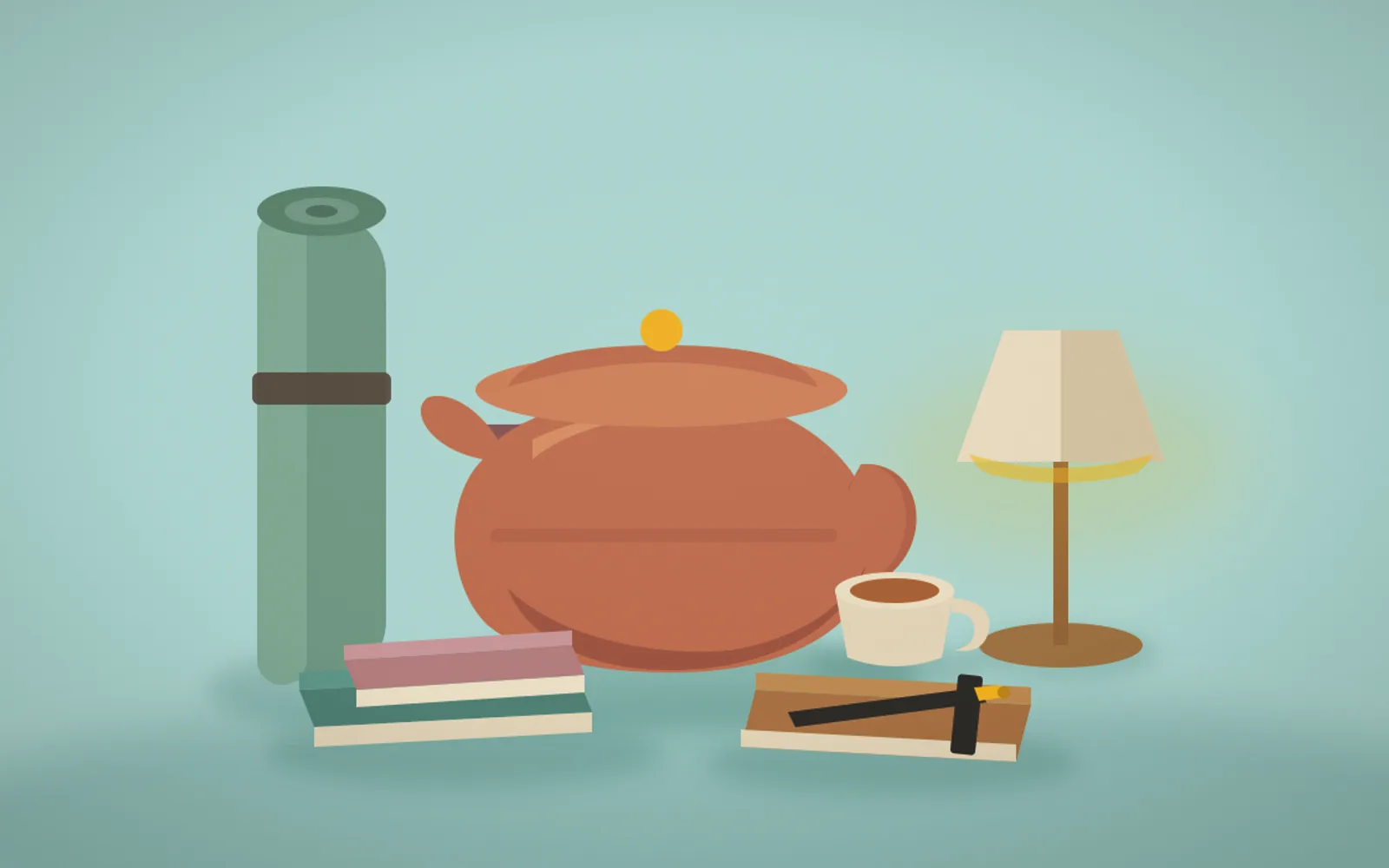
Here's what to gather before you start. The essentials are marked.
Some links below are affiliate links. As an Amazon Associate, trylii.com earns from qualifying purchases, at no extra cost to you.
FAQs
No, though it sits right at the edge of it. Yoga Nidra is a guided state of conscious relaxation where the body sleeps but a thread of awareness stays awake. You lie still and follow a voice through the practice. I sometimes drift fully asleep and that is fine, but the real practice is hovering in that border state, which is said to be deeply restorative. Practitioners often claim a single session feels like hours of rest, and on a tired afternoon I half believe it.
You lie still and follow the guide's voice, which is the whole appeal. A typical Yoga Nidra recording walks you through a body scan, some breath awareness, and visualisations. There is nothing to achieve and no pose to hold. I just lie on my back, often under a blanket because the body cools when this still, and let the instructions move my attention around. Falling asleep is allowed. Trying hard is not.
Sessions usually run twenty to forty-five minutes. I use a short twenty-minute one in the early afternoon when energy dips, and a longer one in bed when sleep is hard to find. It works well as a nap replacement because of how rested you feel afterward. Avoid doing an energising version right before bed. For sleep, choose a recording that is specifically designed to let you drift off at the end.
Insight Timer has hundreds of free Yoga Nidra tracks, which is where I started. Look for guides with slow, steady voices, because a rushed or overly bright voice breaks the spell. Ally Boothroyd and Jennifer Piercy are two names that come up again and again for good reason. Try a few and notice which voice lets you settle. The voice matters more than the script, and the right one makes the practice effortless.
You might also like
 BODY
Sun salutations
BODY
Sun salutations
 BODY
Seasonal reflection journaling
BODY
Seasonal reflection journaling
 BODY
Digital sunset routine
BODY
Digital sunset routine
 BODY
Seasonal body care recipes (scrubs, oils)
BODY
Seasonal body care recipes (scrubs, oils)
 BODY
Breath counting meditation
BODY
Breath counting meditation
 BODY
Building an evening wind-down ritual
BODY
Building an evening wind-down ritual
 BODY
Foam rolling for recovery
BODY
Foam rolling for recovery
 BODY
Hand and cuticle care ritual
BODY
Hand and cuticle care ritual
 BODY
Cold plunge & ice bath
BODY
Cold plunge & ice bath
 BODY
Energy/mood mapping
BODY
Energy/mood mapping
 VISUAL
Zine comics
VISUAL
Zine comics
 SKILL
Making QR code art
See all in Body & Being
SKILL
Making QR code art
See all in Body & Being