Making sauerkraut
CostFree to Low
Includes: A head of cabbage, salt and a jar, with near-zero equipment cost Example: A head of cabbage 1-2, salt and jar minimal
What it is
What turns a shredded cabbage and a spoon of salt into something tangy, fizzy, and alive? Nothing you add. The bacteria already living on the cabbage leaves do the entire job, given salt, time, and no oxygen.
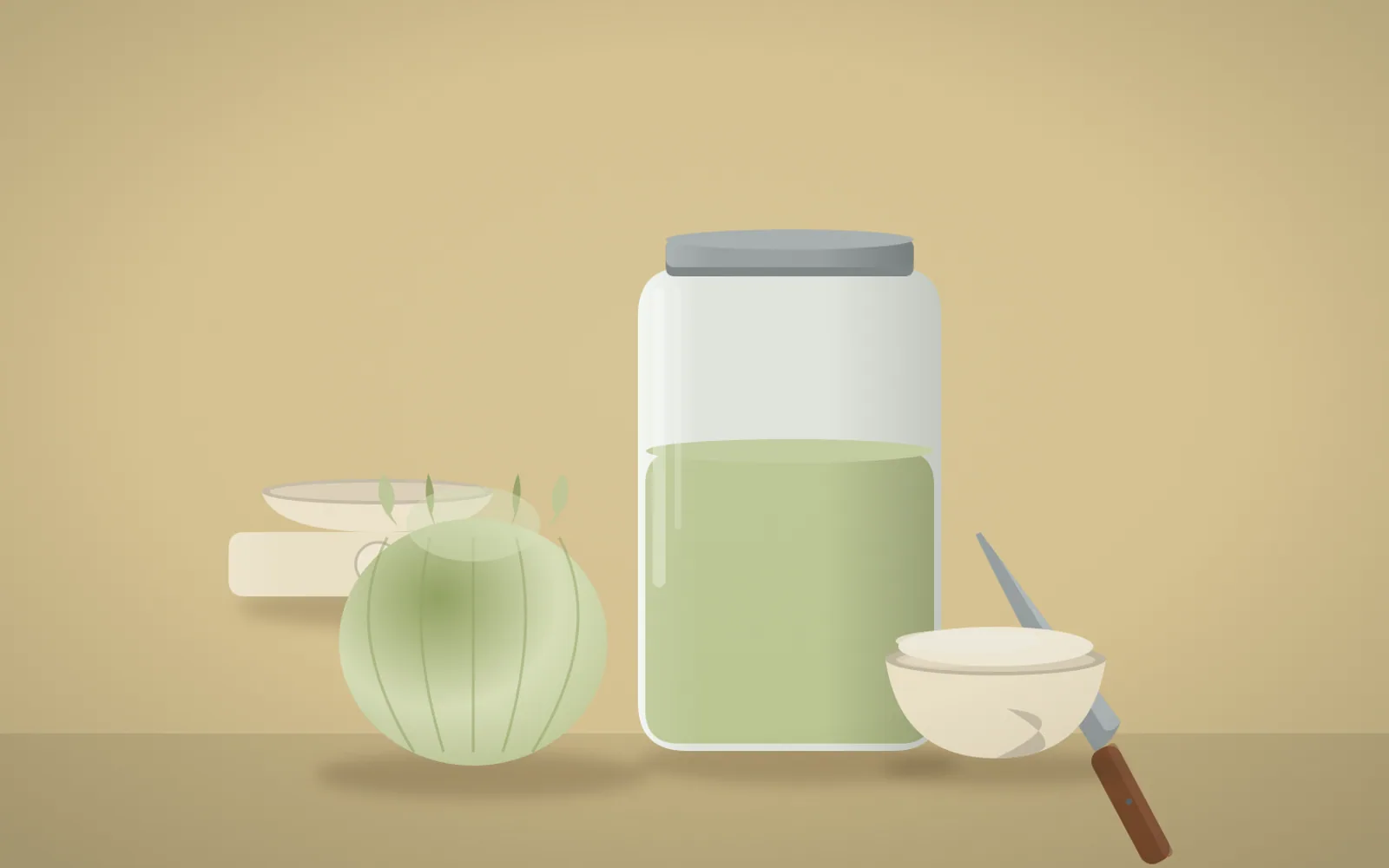
Making sauerkraut is the practice of fermenting shredded cabbage in its own brine until it sours. You salt the cabbage, massage it until it releases liquid, then pack it tight under that liquid so the air is shut out. Lactic acid bacteria take over, converting sugars into acid that preserves the cabbage and gives it that sharp, clean tang.
The ratio is the only number you have to respect. Around 2% salt by weight, which is roughly 20 grams of salt per kilo of cabbage, creates the conditions where the right bacteria thrive and the wrong ones cannot. Too little salt risks mush, too much stalls the ferment. Once the ratio is right, the cabbage all but makes itself over one to four weeks at room temperature.
Most people start with plain green cabbage and a clean jar, then graduate to caraway, juniper, or shredded carrot. The first batch teaches you the smell, which is sour and faintly sulphurous but never rotten. A kilo of cabbage costs under €1 and yields a jar that would sell for several euro in a health shop. Most people who taste their own never go back to the pasteurised version, which has no live cultures at all.
How it works
The single thing beginners get wrong is salt quantity, and getting it wrong invites the wrong bacteria. Weigh both cabbage and salt: 2% salt by weight is the reliable ratio, so 20g of salt per kilo of shredded cabbage. Too little and it rots, too much and the fermentation stalls.
Shred the cabbage finely and massage the salt in by hand for a good five to ten minutes. This feels like nothing is happening at first, then the cabbage suddenly weeps a surprising amount of liquid as the salt draws water out through osmosis. That liquid is your brine, and you need enough of it to submerge everything.
Pack the cabbage tightly into a clean jar, pressing down hard so the brine rises above the surface. Everything must stay under the liquid, because exposure to air is what causes mould. A fermentation weight or even a smaller water-filled jar holds it down. Leave a few centimetres of headspace, since the mixture bubbles and expands.
Ferment at room temperature, ideally around 18 to 22°C, out of direct sun. Taste from day five onwards. It is ready when it tastes pleasantly sour, usually one to four weeks depending on warmth, then move it to the fridge to slow things right down.
Benefits
What you need
Here's what to gather before you start. The essentials are marked.
Some links below are affiliate links. As an Amazon Associate, trylii.com earns from qualifying purchases, at no extra cost to you.
FAQs
Yes, lacto-fermentation is one of the safest preservation methods because the lactic acid environment stops harmful bacteria surviving. The rule is simple: if it smells pleasantly sour, it's good, and if it smells genuinely putrid like rot rather than tang, throw it out. Keeping the cabbage submerged under the brine is what keeps it safe, since mould grows on anything exposed to air. In years of doing this, a bad batch announces itself clearly.
Not enough salt or not enough massaging. Salt pulls water out of the cabbage, so if it stays dry, you either under-salted or stopped squeezing too soon. Aim for 2% salt by weight (20g per kilo of cabbage) and massage hard for a solid five to ten minutes until it goes limp and wet. If it still won't cover after 24 hours, top up with a 2% brine (2g salt per 100ml water).
2% of the cabbage weight is the reliable standard. Weigh the trimmed cabbage, multiply by 0.02, and that's your salt. Use non-iodised salt, since iodine and anti-caking agents can cloud the brine or inhibit fermentation. Sea salt or pickling salt both work fine. Too little salt risks a mushy, off batch, too much just slows things down.
Yes, this is where it gets fun. Caraway seeds are the classic German addition, while juniper berries, grated carrot, apple, or garlic all work beautifully. Keep any additions below the brine line and don't go overboard on watery vegetables, which can soften the whole batch. Start with plain or just caraway, then experiment once you know the base process.
You might also like
 KITCHEN
Making herbal jellies
KITCHEN
Making herbal jellies
 KITCHEN
Crafting infused vinegars
KITCHEN
Crafting infused vinegars
 KITCHEN
Baking geometric-patterned cakes
KITCHEN
Baking geometric-patterned cakes
 KITCHEN
Smoke-infusing at home
KITCHEN
Smoke-infusing at home
 KITCHEN
Layered cake decorating
KITCHEN
Layered cake decorating
 KITCHEN
Laminated croissant dough
KITCHEN
Laminated croissant dough
 KITCHEN
Crafting edible flower ice cubes
KITCHEN
Crafting edible flower ice cubes
 KITCHEN
Charcuterie board arranging
KITCHEN
Charcuterie board arranging
 KITCHEN
Spherification techniques
KITCHEN
Spherification techniques
 KITCHEN
Old-fashioned bread pudding
KITCHEN
Old-fashioned bread pudding
 HOME
Floating shelf installation
HOME
Floating shelf installation
 KITCHEN
Choux pastry and éclairs
See all in In the Kitchen
KITCHEN
Choux pastry and éclairs
See all in In the Kitchen