Somatic movement exploration

CostLow
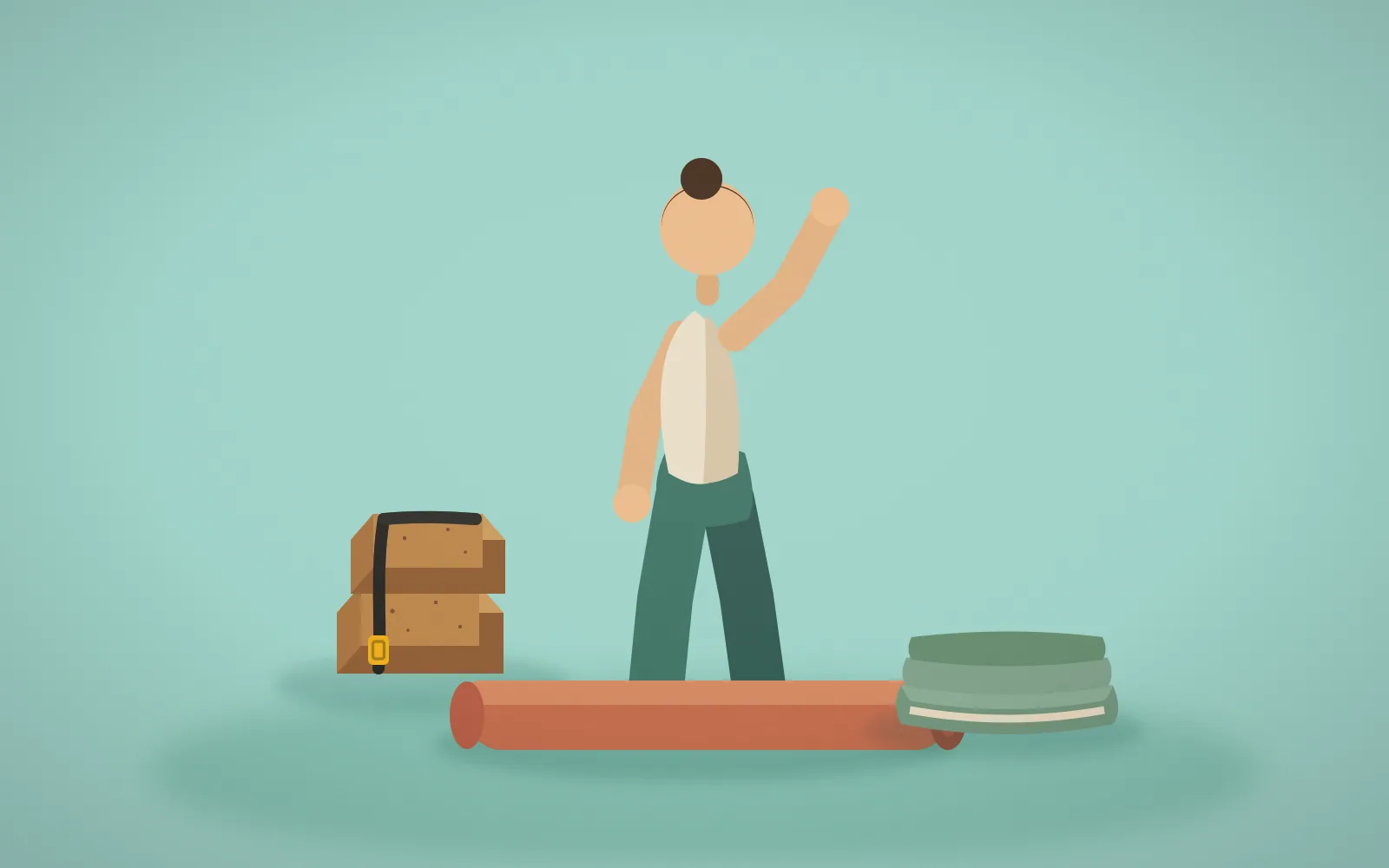
Includes: core materials, tools, or kits Example: most people use what they already have, comfy clothes and floor space. Some might add a cork or natural rubber mat (€50–100), or a bolster or soft ball for extra exploration (€20–50). Many online classes are free or donation-based.
What it is
A workout tells your body what to do. Somatic movement asks it what it wants. That difference is the whole practice. There's no choreography to learn, no poses to nail, no count to follow. Instead you tune inward and let small, curious movements emerge from how the body actually feels in the moment. It sounds vague until you've done it, and then it makes a strange kind of sense.
The word "somatic" comes from the Greek soma, meaning the living body experienced from within rather than observed from outside. So the practice prioritises sensation over shape. You might spend ten minutes slowly exploring how your shoulder wants to circle, or rocking your pelvis a few millimetres to feel where tension lives. Methods like Feldenkrais and the work of Thomas Hanna formalised this in the twentieth century, but the core idea is older and simpler: movement guided by felt sense rather than mirror image.
Most people start lying on the floor, because gravity does less and the small signals become easier to notice. There's no right answer, which throws people used to fitness instruction. The first time, you may feel slightly silly. After a few sessions the internal listening sharpens and you start catching habitual holding patterns you never knew you carried.
It works better for releasing chronic tension than it has any right to. The trade-off is that it gives you nothing to measure, no reps, no progress photos, which frustrates goal-driven people.
How it works
Forget everything you know about exercise form, because here there is no correct shape to hit. The most common mistake people bring from yoga or the gym is trying to do somatic movement "right," reaching for a pose or a target. There is no target. The entire practice is about following sensation, so the first thing to unlearn is the habit of performing a movement.
Lie down on your back on a mat or carpet to begin, because gravity does less work for you there and the small internal signals become much easier to feel. Start with something tiny. Slowly roll your head a few centimetres to one side and notice exactly how that feels, where it catches, where it moves freely. Then let the movement grow only if the body wants it to. You might spend three or four minutes just exploring how one shoulder wants to circle, moving so slowly that an observer might barely see it. The slowness and the smallness are what let you feel the habitual holding patterns most people carry without noticing.
The guiding question throughout is not "am I doing this right" but "what does this feel like, and where does my body want to go next." You follow curiosity. A movement might repeat ten times, then change on its own. Sessions run anywhere from ten minutes to half an hour, and there is no sequence to complete.
Benefits
What you need
Here's what to gather before you start. The essentials are marked.
Some links below are affiliate links. As an Amazon Associate, trylii.com earns from qualifying purchases, at no extra cost to you.
FAQs
It is movement guided by how things feel from the inside rather than how they look from the outside. There is no correct shape to hit and no sequence to follow. You move slowly and pay attention to sensation, tension, and ease, letting the body lead. The aim is to rebuild the connection between brain and body, which often dulls under stress or after injury. It can look like very little is happening from the outside.
There is no right shape, but it is not random either. You follow attention and sensation, which gives it direction even without a fixed routine. A common starting point is to lie down, scan for an area of tension, and explore tiny movements around it, noticing what changes. The structure comes from curiosity rather than choreography. If you find yourself wondering whether you are doing it right, you have understood the point.
Stretching aims at a result, usually more range. Yoga moves toward defined poses. Somatic movement has no target shape at all. The slow, attentive exploration is the entire practice, and where you end up does not matter. Practices like Feldenkrais and the work of Thomas Hanna are the best-known formal versions if you want a structured way in.
It can, particularly the kind of tension that holds on through habit. Many people clench shoulders, jaw, or hips without noticing, and somatic work rebuilds the awareness needed to release patterns that stretching never touches. It is not a medical treatment and will not fix structural injury. For the low-grade, stress-held tightness that follows you around, though, it often helps where harder approaches have not.
You can absolutely start at home. Lie on the floor, move slowly, and pay close attention to what you feel. Free guided sessions from Feldenkrais practitioners are a gentle on-ramp because someone talking you through it makes the inward attention easier at first. A teacher helps if you want to go deeper, but nothing stops you exploring tonight on your bedroom floor.
You might also like
 BODY
Gentle yoga flow sequences
BODY
Gentle yoga flow sequences
 BODY
DIY calming herbal teas for sleep
BODY
DIY calming herbal teas for sleep
 BODY
Bath bomb crafting
BODY
Bath bomb crafting
 BODY
Connecting breath practice to the seasons
BODY
Connecting breath practice to the seasons
 BODY
Mobility flow for stiff joints
BODY
Mobility flow for stiff joints
 BODY
Creating seasonal bath blends
BODY
Creating seasonal bath blends
 BODY
Seasonal body care recipes (scrubs, oils)
BODY
Seasonal body care recipes (scrubs, oils)
 BODY
Creating elemental self-care rituals (Earth, Air, Fire, Water)
BODY
Creating elemental self-care rituals (Earth, Air, Fire, Water)
 BODY
Herbal sleep pillow making
BODY
Herbal sleep pillow making
 BODY
DIY facial steam with herbs
BODY
DIY facial steam with herbs
 WILD
Coastal path walking
WILD
Coastal path walking
 COLLECT
Restoring vintage model kits or toys
See all in Body & Being
COLLECT
Restoring vintage model kits or toys
See all in Body & Being