Qi Gong practice

CostLow
Includes: core materials, tools, or kits Example: you really don’t need much, comfortable clothes and a bit of space. If you want, you can invest in a cork or rubber mat (€40–100), but many people practice without one. Many video classes are free or low-cost.
What it is
Qi flows along channels the way water finds the lowest path, at least according to the framework Qi Gong sits inside. You don't need to believe the metaphysics to feel what the practice does. On the surface it looks almost too simple to matter: slow movements, steady breath, a few standing postures held longer than seems necessary. Underneath, something settles. People describe a quiet, grounded sort of energy that's genuinely hard to put into words until you've stood there yourself.
The practice is ancient, with roots in Chinese medicine and martial training going back more than two thousand years. The name translates loosely as "energy work" or "life-force cultivation." Movements have evocative names like "lifting the sky" or "carrying the moon," and each pairs a gesture with a breath and a point of focus. The slowness is the difficulty, oddly enough. Moving an arm across thirty seconds asks for more control than swinging it fast.
Most people start with a single set such as the Eight Pieces of Brocade, a sequence of eight movements that takes ten to fifteen minutes. You can do it in socks on a kitchen floor. No flexibility prerequisite, no equipment, and it scales to whatever your body can manage on a given day.
How it works
If you have never done anything this slow before, the hardest adjustment is mental, not physical. Qi Gong asks you to move at perhaps a quarter of your normal speed, and the instinct to speed up is strong. Resist it. The slowness is where the practice does its work, because moving an arm across fifteen seconds demands a control and an attention that a quick swing never does.
A good entry point is the Eight Pieces of Brocade, a set of eight movements practised for roughly a thousand years. Begin standing with feet shoulder-width apart, knees very slightly bent, weight evenly grounded through the soles. The first movement, often called "two hands hold up the heavens," is simply raising both arms slowly overhead on an inhale, interlacing the fingers and pressing the palms upward, then lowering on an exhale. Each movement pairs a slow gesture with a full breath and a soft focus. You repeat each one six to eight times before moving to the next, and the whole set takes ten to fifteen minutes.
The breath is always slow, deep, and through the nose, sinking into the belly rather than the chest. Beginners tend to breathe too fast for the movement, so let the gesture set the pace and stretch the breath to match it. The knees stay soft throughout, never locked, which keeps the legs quietly working the whole time.
Benefits
What you need
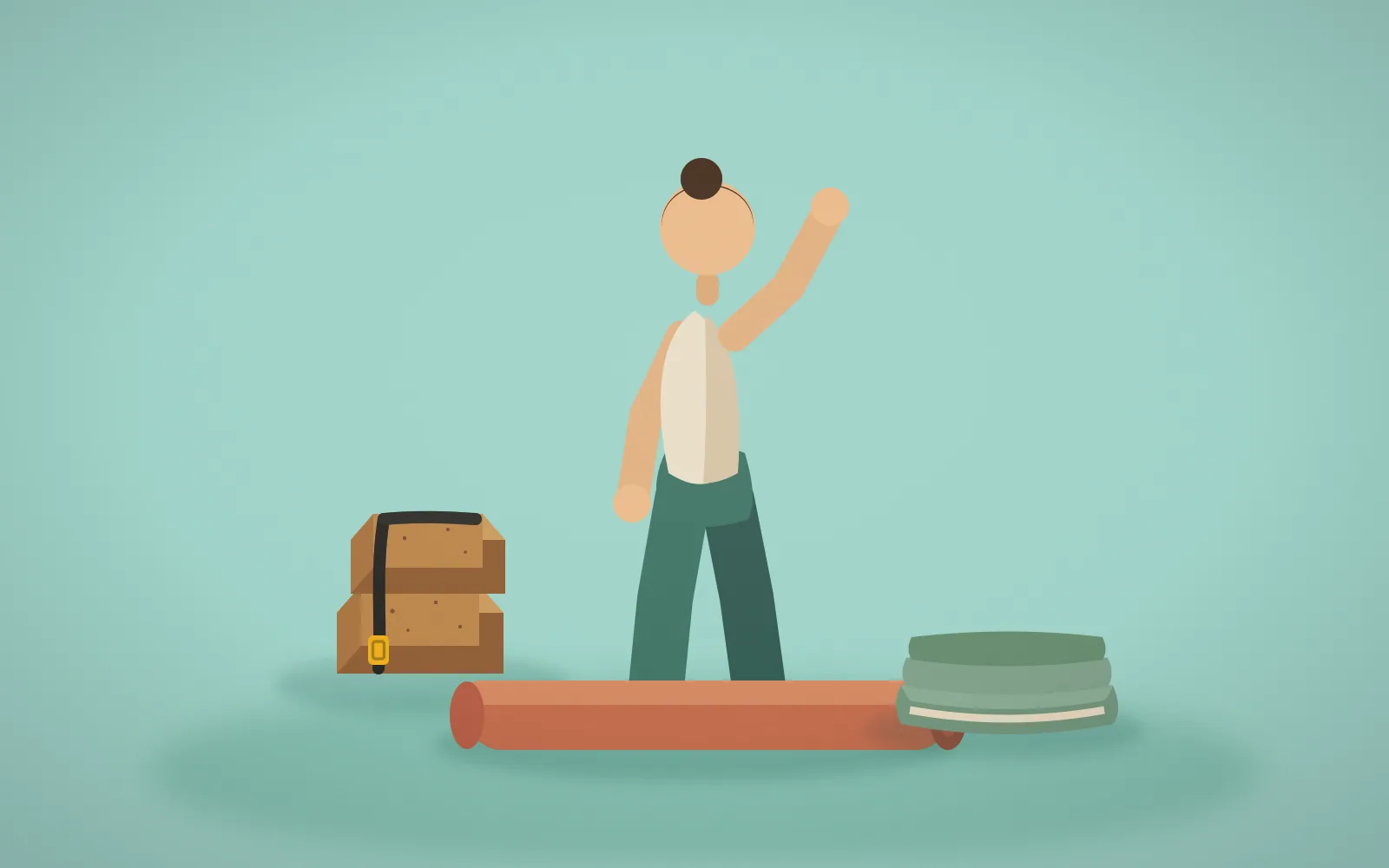
Here's what to gather before you start. The essentials are marked.
Some links below are affiliate links. As an Amazon Associate, trylii.com earns from qualifying purchases, at no extra cost to you.
FAQs
Qi Gong is simpler and more repetitive. It uses individual movements, often repeated many times, paired with breath, and you can learn a single useful exercise in minutes. Tai Chi links movements into long flowing sequences, called forms, that take much longer to memorise. Both come from the same roots. If you want something you can practise tomorrow morning without a teacher, start with Qi Gong.
No. The breathing, slow movement, and shifting of weight produce real effects on circulation, balance, and stress regardless of how you explain them. Think of qi as a useful word for the felt sense of energy and attention moving through the body, whether or not you take it literally. The physical practice is the same either way.
Many people feel calmer and warmer in the hands within a single ten-minute session, because the slow movement and breath shift circulation quickly. Balance and ease of movement build over weeks. A short daily practice does far more than a long weekly one. Fifteen minutes most mornings is a realistic and effective starting point.
Start with one foundational exercise rather than a whole routine. "Lifting the sky" and "shaking" are two of the most common beginner movements and need no equipment or space beyond arm's reach. Jeffrey Chand and Mimi Kuo-Deemer both have clear free videos online. Learn one movement well, do it daily for a fortnight, then add the next. Collecting twenty movements you do badly helps less than three you do well.
You might also like
 BODY
Morning pages writing
BODY
Morning pages writing
 BODY
Desk stretch micro-breaks
BODY
Desk stretch micro-breaks
 BODY
DIY calming herbal teas for sleep
BODY
DIY calming herbal teas for sleep
 BODY
Creating elemental self-care rituals (Earth, Air, Fire, Water)
BODY
Creating elemental self-care rituals (Earth, Air, Fire, Water)
 BODY
Restorative sound bath at home
BODY
Restorative sound bath at home
 BODY
Gentle yoga flow sequences
BODY
Gentle yoga flow sequences
 BODY
DIY hair oiling ritual
BODY
DIY hair oiling ritual
 BODY
DIY facial steam with herbs
BODY
DIY facial steam with herbs
 BODY
Guided Yoga Nidra
BODY
Guided Yoga Nidra
 BODY
Handcrafting natural body scrubs
BODY
Handcrafting natural body scrubs
 COLLECT
Kitbashing dollhouse elements (mixing kits)
COLLECT
Kitbashing dollhouse elements (mixing kits)
 HOME
DIY reusable paper towels (cloth "unpaper" towels)
See all in Body & Being
HOME
DIY reusable paper towels (cloth "unpaper" towels)
See all in Body & Being